Live briefing
Everything about Classification rule
Given a population whose members each belong to one of a number of different sets or classes, a classification rule or classifier is a procedure by which the elements of the population set are each predicted to belong to one of the classes. A perfect classification is one for which every element in the population is assigned to the class it really belongs to. The bayes classifier is the classifier which assigns classes optimally based on the known attributes of the elements to be classified. Wikipedia →
🧭 Start here: a 6-step reading path
- Read the overview: Classification ruleA 5-minute orientation
- Skim a recent paper: Hierarchical belief rule-based model for imbalanced multi-classificationInfluential work since 2022
- Pick up a classic book: Classified catalogue codeThe most-reprinted book on the subject
- Read the landmark paper: Rule-plus-exception model of classification learning.Cited 486 times
- Go sideways: Confusion of the inverseA closely related topic
- Go sideways: Likelihood ratios in diagnostic testingA closely related topic
📖 Definitions
No dictionary entry for this exact phrase.
🏆 Landmark papers (most cited)
Rule-plus-exception model of classification learning.
Effect of rule weights in fuzzy rule-based classification systems
Rule weight specification in fuzzy rule-based classification systems
Adaptive fuzzy rule-based classification systems
Data classification using evidence reasoning rule
Intelligent rule‐based phishing websites classification
An interpretable classification rule mining algorithm
Fuzzy Rule-Based Classification Method for Incremental Rule Learning
🆕 Influential since 2022
Hierarchical belief rule-based model for imbalanced multi-classification
Deep Fuzzy Rule-Based Classification System With Improved Wang–Mendel Method
RuleCOSI+: Rule extraction for interpreting classification tree ensembles
A dynamic rule-based classification model via granular computing
Fine-tuning GPT-3 for legal rule classification
📚 Books worth reading
- 📕Classified catalogue codeS. R. Ranganathan, A. Neelameghan · 1934
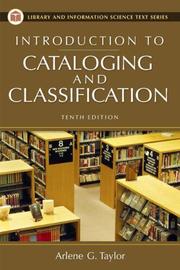 Introduction to cataloging and classificationArlene G. Taylor, Daniel N. Joudrey · 2000
 Introduction to cataloging and classificationBohdan S. Wynar · 1964
 Library of Congress subject headingsLois Mai Chan · 1978
 Cataloging sheet mapsPaige G. Andrew · 2003
 Cataloging of audiovisual materialsNancy B. Olson · 1981
 Subject cataloging manualLibrary of Congress. Cataloging Policy and Support Office., Library of Congress · 1991
 Anglo-American cataloguing rulesGorman, Michael, Paul W. Winkler · 1988
Ranked by number of editions on Open Library, a rough measure of how lasting a book is.
🔗 Related topics
- Confusion of the inverse Confusion of the inverse, also called the conditional probability fallacy or the inverse fallacy, is a logical fallacy whereupon a conditional probability…
- Likelihood ratios in diagnostic testing In evidence-based medicine, likelihood ratios are used for assessing the value of performing a diagnostic test. They combine sensitivity and specificity…
- Youden's J statistic Youden's J statistic (also called Youden's index) is a single statistic that captures the performance of a dichotomous diagnostic test. In meteorology…
- Prevalence threshold Prevalence threshold is a mathematical concept in Bayesian statistics, diagnostic test interpretation, and screening theory. It denotes a distinguished…
- Evaluation of binary classifiers Evaluation of a binary classifier typically assigns a numerical value, or values, to a classifier that represent its accuracy. An example is error rate…
- Diagnostic odds ratio In medical testing with binary classification, the diagnostic odds ratio (DOR) is a measure of the effectiveness of a diagnostic test. It is defined as…
- Binary classification Binary classification is the task of putting things into one of two categories (each called a class). As such, it is the simplest form of the general task…
- P4-metric The P4 metric (also known as FS or Symmetric F) enables performance evaluation of a binary classifier. The P4 metric is calculated from precision, recall…