Live briefing
Everything about Class formation
In mathematics, a class formation is a topological group acting on a module satisfying certain conditions. Class formations were introduced by Emil Artin and John Tate to organize the various Galois groups and modules that appear in class field theory. Wikipedia →
🧭 Start here: a 6-step reading path
- Read the overview: Class formationA 5-minute orientation
- Skim a recent paper: Advanced Glycation End-Products (AGEs): Formation, Chemistry, Classification, Receptors, and Diseases Related to AGEsInfluential work since 2022
- Pick up a classic book: InstructionThe most-reprinted book on the subject
- Read the landmark paper: Quantitative universality for a class of nonlinear transformationsCited 3,010 times
- Go sideways: Galois representationA closely related topic
- Go sideways: Class field theoryA closely related topic
📖 Definitions
No dictionary entry for this exact phrase.
🏆 Landmark papers (most cited)
Quantitative universality for a class of nonlinear transformations
Civic Integration and Class Formation
Class and Precarity: An Unhappy Coupling in China’s Working Class Formation
Class, 'Culture' and the Social Formation
Middle classes, democratization, and class formation
Settler Colonialism: Economic Development and Class Formation
Class Formation and Consumption among Middle-Class Professionals in Shenzhen
Equilibrium formation of class action suits
🆕 Influential since 2022
Advanced Glycation End-Products (AGEs): Formation, Chemistry, Classification, Receptors, and Diseases Related to AGEs
Robust Adaptive General Formation Control of a Class of Networked Quadrotor Aircraft
Data-Driven Bipartite Formation for a Class of Nonlinear MIMO Multiagent Systems
The Baby and the Bathwater: Class Analysis and Class Formation after Deindustrialisation
Which class matters? Juxtaposing multiple class environments as frames-of-reference for academic self-concept formation.
📚 Books worth reading
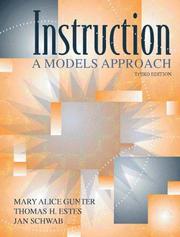 InstructionMary Alice Gunter, Thomas H. Estes · 1990
 Creating inclusive school communitiesJennifer York-Barr, Robi M. Kronberg · 1996
 Better behaviour in classroomsKay Mathieson · 2002
 Learning with trade unionsSteve Shelley, Moira Calveley · 2007
 La supervision pédagogiqueKeith A. Acheson, Meredith Damien Gall · 1993
 Genetics of the immune responseNobel Symposium (55th 1982 Saltsjöbaden, Sweden) · 1983
 Predatory ruleRobert Fatton · 1992
 Responding to the Educational Needs of Today's Workplace (New Directions for Adult and Continuing Education)Ivan Charner · 1985
Ranked by number of editions on Open Library, a rough measure of how lasting a book is.
🔗 Related topics
- Galois representation In mathematics, a Galois module is a G-module, with G being the Galois group (named for Évariste Galois) of some extension of fields. The term Galois representa…
- Class field theory In mathematics, class field theory (CFT) is the fundamental branch of algebraic number theory whose goal is to describe all the abelian Galois extensions…
- Étale cohomology In mathematics, the étale cohomology groups of an algebraic variety or scheme are algebraic analogues of the usual cohomology groups with finite coefficients…
- Kummer theory In abstract algebra and number theory, Kummer theory provides a description of certain types of field extensions involving the adjunction of nth roots…
- Hasse norm theorem In number theory, the Hasse norm theorem states that if L/K is a cyclic extension of number fields, then if a nonzero element of K is a local norm everywhere…
- Galois cohomology In mathematics, Galois cohomology is the study of the group cohomology of Galois modules, that is, the application of homological algebra to modules for…
- Artin transfer (group theory) In the mathematical field of group theory, an Artin transfer is a certain homomorphism from an arbitrary finite or infinite group to the commutator quotient…
- Azumaya algebra In mathematics, an Azumaya algebra is a generalization of central simple algebras to R-algebras where R need not be a field. Such a notion was introduced…