Live briefing

Everything about Chroot
Shell command and system call that changes the apparent root directory
chroot is a shell command and a system call on Unix and Unix-like operating systems that changes the apparent root directory for the current running process and its children. A program that is run in such a modified environment cannot name files outside the designated directory tree. The term chroot may refer to the chroot(2) system call or the chroot(8) command-line utility. The modified environment is called a chroot jail. Wikipedia →
🧭 Start here: a 6-step reading path
- Read the overview: ChrootA 5-minute orientation
- Pick up a classic book: Apache CookbookThe most-reprinted book on the subject
- Go sideways: OS-level virtualizationA closely related topic
- Go sideways: OS virtualization and emulation on AndroidA closely related topic
📖 Definitions
Verb To change the apparent root directory for a running process, affecting whether or not it can access certain files etc.
🏆 Landmark papers (most cited)
- No matching papers found.
📚 Books worth reading
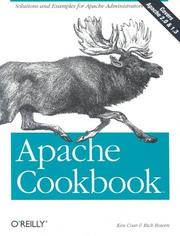 Apache CookbookKen Coar, Rich Bowen · 2003
 SystemRescueFrancois Dupoux · 2021
 The Book of PostfixPatrick Koetter, Ralf Hildebrandt · 2005
- 📕Chroot Your Red Hat/Centos 8 - Extreme HardeningAdriana de Oliveira, Renato de Oliveira · 2020
Ranked by number of editions on Open Library, a rough measure of how lasting a book is.
🔗 Related topics
- OS-level virtualization OS-level virtualization is an operating system (OS) virtualization paradigm in which the kernel allows the existence of multiple isolated user space instances…
- OS virtualization and emulation on Android Android devices have the ability to run virtual machines or emulate other operating systems. It does this either via desktop virtualization, platform virtualiza…
- Mount (Unix) In computing, mount is a command in various operating systems. Before a user can access a file on a Unix-like machine, the file system on the device which…
- FreeBSD jail The jail mechanism is an implementation of FreeBSD's OS-level virtualisation that allows system administrators to partition a FreeBSD-derived computer…
- Authbind authbind is an open-source system utility written by Ian Jackson and is distributed under the GNU General Public License. The authbind software allows…
- CRUX CRUX is a lightweight x86-64 Linux distribution targeted at experienced Linux users and delivered by a tar.gz-based package system with BSD-style initscripts…
- Sandbox (computer security) In computer security, a sandbox is a security mechanism for separating running programs, usually in an effort to mitigate system failures and/or software…
- Setuid In Unix-like systems, the access rights flags setuid and setgid (short for set user identity and set group identity) allow users to run an executable with…