Everything about Capacitance
Ability of a body to store an electrical charge

Capacitance is the ability of an object to store electric charge. It is measured by the change in charge in response to a difference in electric potential, expressed as the ratio of those quantities. Commonly recognized are two closely related notions of capacitance: self-capacitance and mutual capacitance. An object that can be electrically charged exhibits self-capacitance, for which the electric potential is measured between the object and ground. Mutual capacitance is measured between two components, and is particularly important in the operation of the capacitor, an elementary linear electronic component designed to add capacitance to an electric circuit. Wikipedia →
🧭 Start here: a 6-step reading path
- Read the overview: CapacitanceA 5-minute orientation
- Skim a recent paper: Understanding the Electric Double-Layer Structure, Capacitance, and Charging DynamicsInfluential work since 2022
- Pick up a classic book: Airport slotsThe most-reprinted book on the subject
- Read the landmark paper: Conductive two-dimensional titanium carbide ‘clay’ with high volumetric capacitanceCited 5,996 times
- Go sideways: CapacitorA closely related topic
- Go sideways: Capacitor typesA closely related topic
📖 Definitions
Noun The property of an electric circuit or its element that permits it to store charge, defined as the ratio of stored charge to potential over that element or circuit (Q/V); SI unit: farad (F).
Noun An element of an electrical circuit exhibiting capacitance.
🏆 Landmark papers (most cited)
Conductive two-dimensional titanium carbide ‘clay’ with high volumetric capacitance
Cation Intercalation and High Volumetric Capacitance of Two-Dimensional Titanium Carbide
Anomalous Increase in Carbon Capacitance at Pore Sizes Less Than 1 Nanometer
Determination of effective capacitance and film thickness from constant-phase-element parameters
Conductive MOF electrodes for stable supercapacitors with high areal capacitance
Flexible and conductive MXene films and nanocomposites with high capacitance
Technical Note: Concerning the Conversion of the Constant Phase Element Parameter Y into a Capacitance
Use of Negative Capacitance to Provide Voltage Amplification for Low Power Nanoscale Devices
🆕 Influential since 2022
Understanding the Electric Double-Layer Structure, Capacitance, and Charging Dynamics
Structural disorder determines capacitance in nanoporous carbons
Conductive PEDOT:PSS/cellulose nanofibril paper electrodes for flexible supercapacitors with superior areal capacitance and cycling stability
Raman Spectroscopy Measurements Support Disorder-Driven Capacitance in Nanoporous Carbons
Giant energy storage and power density negative capacitance superlattices
📚 Books worth reading
 Airport slotsHans-Martin Niemeier, Peter Forsyth · 2007
 The Art of Capacity PlanningJohn Allspaw · 2008
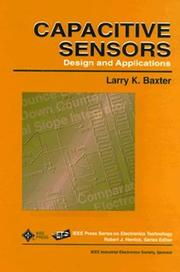 Capacitive sensorsLarry K. Baxter, Robert J. Herrick · 1996
- 📕KC-135 flight testing of void fraction capacitance probe for microgravity two-phase flowFrederick R. Best · 1996
 Capacity planning for Web performanceDaniel A. Menascé, Daniel Menasce · 1998
 Helium Research Center internal reportJames R. McVey · 1964
- 📕Safe operation of capacitance meters using high applied-bias voltageAlvin M. Goodman · 1976
- 📕Error analysis and calibration uncertainty of capacitance standards at NISTY. May Chang · 2000
Ranked by number of editions on Open Library, a rough measure of how lasting a book is.
🔗 Related topics
- Capacitor A capacitor is a device that stores electrical energy by accumulating electric charges on two closely spaced surfaces that are insulated from each other…
- Capacitor types Capacitors are manufactured in many styles, forms, dimensions, and from a large variety of materials. They all contain at least two electrical conductors…
- Quantum capacitance Quantum capacitance, also known as chemical capacitance is defined as the variation of electrical charge q {\displaystyle q} with respect to the variation…
- Quantum LC circuit An LC circuit can be quantized using the same methods as for the quantum harmonic oscillator. An LC circuit is a variety of resonant circuit, and consists…
- Applications of capacitors Capacitors have many uses in electronic and electrical systems. They are so ubiquitous that it is rare that an electrical product does not include at least…
- Ceramic capacitor A ceramic capacitor is a fixed-value capacitor where the ceramic material acts as the dielectric. It is constructed of two or more alternating layers of…
- Bias tee A bias tee is a three-port network used for setting the DC bias point of some electronic components without disturbing other components. The bias tee is…
- Dielectric loss In electrical engineering, dielectric loss is a dielectric material's inherent dissipation of electromagnetic energy (e.g. heat). It can be parameterized…