Live briefing
Everything about Callback (computer programming)
Function reference passed to and called by another function
In computer programming, a callback is a programming pattern in which a function reference is passed from one context (consumer) to another (provider) such that the provider can call the function. If the function accesses state or functionality of the consumer, then the call is back to the consumer – backwards compared to the normal flow of control in which a consumer calls a provider. Wikipedia →
🧭 Start here: a 6-step reading path
- Read the overview: Callback (computer programming)A 5-minute orientation
- Pick up a classic book: Eloquent JavascriptThe most-reprinted book on the subject
- Go sideways: Higher-order functionA closely related topic
- Go sideways: Template (C++)A closely related topic
📖 Definitions
No dictionary entry for this exact phrase.
🗂️ The subject at a glance
🏆 Landmark papers (most cited)
- No matching papers found.
📚 Books worth reading
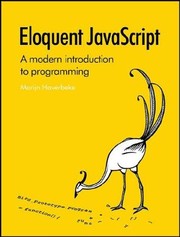 Eloquent JavascriptMarijn Haverbeke · 2009
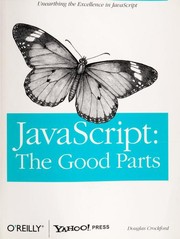 JavaScriptDouglas Crockford, Ke luo ke fu de · 2008
 SystemVerilog for VerificationChris Spear · 2006
 Higher-Order PerlMark Jason Dominus · 2005
 Coding with JavaScript for dummiesChris Minnick · 2015
 RESTful Java with JAXRS 20Bill Burke · 2013
 Even Faster Web SitesSteve Souders · 2009
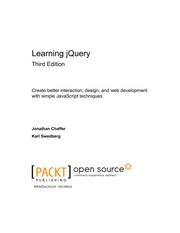 Learning jQueryJonathan Chaffer · 2011
Ranked by number of editions on Open Library, a rough measure of how lasting a book is.
🔗 Related topics
- Higher-order function In mathematics and computer science, a higher-order function (HOF) is a function that does at least one of the following: takes one or more functions as…
- Template (C++) Templates are a feature of the C++ programming language that allow functions and classes to operate with generic types. This allows a function or class…
- Attribute (programming) In object-oriented programming, an attribute is a specification that defines a property of an object, element, or file. It may also refer to or set the…
- Variadic template In computer programming, variadic templates or variation generics are templates that take a variable number of type parameters. They exist in several programmin…
- Async/await In computer programming, the async/await pattern is a syntactic feature of many programming languages that allows an asynchronous, non-blocking function…
- Examples of anonymous functions In computer programming, an anonymous function (function literal, lambda function, or block) is a function definition that is not bound to an identifier…
- Reflective programming In computer science, reflective programming or reflection is the ability of a process to examine, introspect, and modify its own structure and behavior…
- Concepts (C++) Concepts in the C++ programming language are type constraints on templates (or generics). Concepts are named Boolean predicates on template parameters…