Live briefing

Everything about Calcium silicate
Chemical compound naturally occurring as the mineral larnite
Calcium silicate can refer to several silicates of calcium including:CaO·SiO2, wollastonite (CaSiO3) 2CaO·SiO2, larnite (Ca2SiO4) 3CaO·SiO2, alite or (Ca3SiO5) 3CaO·2SiO2, (Ca3Si2O7). Wikipedia →
🧭 Start here: a 6-step reading path
- Read the overview: Calcium silicateA 5-minute orientation
- Skim a recent paper: Carbonation behavior of calcium silicate hydrate (C-S-H): Its potential for CO2 captureInfluential work since 2022
- Pick up a classic book: Mineral Trioxide AggregateThe most-reprinted book on the subject
- Read the landmark paper: Structure of Calcium Silicate Hydrate (C‐S‐H): Near‐, Mid‐, and Far‐Infrared SpectroscopyCited 1,577 times
- Go sideways: AliteA closely related topic
- Go sideways: BeliteA closely related topic
📖 Definitions
Noun The chemical compound Ca2SiO4, used in roads, insulation, bricks, cements, etc. and as an antacid and anticaking agent.
🗂️ The subject at a glance
🏆 Landmark papers (most cited)
Structure of Calcium Silicate Hydrate (C‐S‐H): Near‐, Mid‐, and Far‐Infrared Spectroscopy
The calcium silicate hydrates
Magnesium and calcium silicate hydrates
Calcium Silicate Carbonation Products
Mesoporous calcium silicate glasses. I. Synthesis
Mechanical properties of calcium silicate hydrates
Shear deformations in calcium silicate hydrates
Bioactive calcium silicate ceramics and coatings
🆕 Influential since 2022
Carbonation behavior of calcium silicate hydrate (C-S-H): Its potential for CO2 capture
Effect of alkali hydroxide on calcium silicate hydrate (C-S-H)
Review on CO2 curing of non-hydraulic calcium silicates cements: Mechanism, carbonation and performance
Intrinsic sulfuric acid resistance of C-(N)-A-S-H and N-A-S-H gels produced by alkali-activation of synthetic calcium aluminosilicate precursors
Toward the formation mechanism of synthetic calcium silicate hydrate (C-S-H) - pH and kinetic considerations
📚 Books worth reading
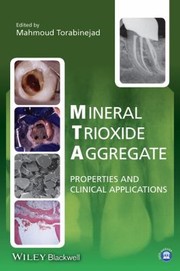 Mineral Trioxide AggregateMahmoud Torabinejad · 2014
- 📕The new lands of ElloeHerbert Enoch Hallam · 1954
- 📕Toxicological profile for synthetic vitreous fibersUnited States. Agency for Toxic Substances and Disease Registry · 2002
- 📕Nature and origin of calc-silicate pods in the lower Littleton Formation, New HampshireGeorge Drake Guthrie · 1984
- 📕Crystallographic data for the calcium silicatesL. Heller · 1956
- 📕Crystallographic data for the calcium silicatesLiselotte Heller · 1956
- 📕Über die CalciumsilicideFritz Müller · 1921
- 📕2nd International Symposium on Autoclaved Calcium Silicate Building Materials, Hannover 25/3 - 2/4-69Ulf A. Halvorsen · 1969
Ranked by number of editions on Open Library, a rough measure of how lasting a book is.
🔗 Related topics
- Alite Alite is an impure form of tricalcium silicate, Ca3SiO5, sometimes formulated as 3CaO·SiO2 (C3S in cement chemist notation), typically with 3-4% of substituent…
- Belite Belite is an industrial mineral important in Portland cement manufacture. Its main constituent is dicalcium silicate, Ca2SiO4, sometimes formulated as…
- Wollastonite Wollastonite is a calcium inosilicate mineral (CaSiO3) that may contain small amounts of iron, magnesium, and manganese substituting for calcium. It is…
- Cement chemist notation Cement chemist notation (CCN) was developed to simplify the formulas cement chemists use on a daily basis. It is a shorthand way of writing the chemical…
- Pozzolanic activity Pozzolanic activity is a measure of the reaction rate between a pozzolan and Ca2+ or calcium hydroxide (Ca(OH)2) in the presence of water. The rate of…
- Silicate A silicate is any member of a family of polyatomic anions consisting of silicon and oxygen, usually with the general formula [SiO(4−2x)− 4−x] n, where…
- Calcium sulfate Calcium sulfate (or calcium sulphate) is an inorganic salt with the chemical formula CaSO 4. It occurs in several hydrated forms; the anhydrous state (known…
- Anticaking agent An anticaking agent is an additive placed in powdered or granulated materials, such as table salt or confectioneries, to prevent the formation of lumps…