Live briefing
Everything about Cache timing attack
Class of cybersecurity attacks
Cache timing attacks also known as Cache attacks are a type of side-channel attack that allows attackers to gain information about a system purely by tracking cache access made by the victim system in a shared environment. Wikipedia →
🧭 Start here: a 6-step reading path
- Read the overview: Cache timing attackA 5-minute orientation
- Skim a recent paper: Evict+Spec+Time: Exploiting Out-of-Order Execution to Improve Cache-Timing AttacksInfluential work since 2022
- Pick up a classic book: Modern Operating SystemsThe most-reprinted book on the subject
- Read the landmark paper: Improvement of trace-driven I-Cache timing attack on the RSA algorithmCited 40 times
- Go sideways: Virgil D. GligorA closely related topic
- Go sideways: Cache prefetchingA closely related topic
📖 Definitions
No dictionary entry for this exact phrase.
🗂️ The subject at a glance
No outline available.
🏆 Landmark papers (most cited)
Improvement of trace-driven I-Cache timing attack on the RSA algorithm
Cache-Timing Attacks on RSA Key Generation
Cache-Timing Attack Against HQC
Boosting Profiled Cache Timing Attacks With A Priori Analysis
End-to-end automated cache-timing attack driven by machine learning
Leveraging Cache Management Hardware for Practical Defense Against Cache Timing Channel Attacks
Cache timing attacks on NoC-based MPSoCs
A Survey on Cache Timing Channel Attacks for Multicore Processors
🆕 Influential since 2022
Evict+Spec+Time: Exploiting Out-of-Order Execution to Improve Cache-Timing Attacks
A Countermeasure Approach for Brute-Force Timing Attacks on Cache Privacy in Named Data Networking Architectures
SecurityCloak: Protection against cache timing and speculative memory access attacks
Enabling secure modern web browsers against cache-based timing attacks
A method of defense against cache timing attack in non-volatile memory
📚 Books worth reading
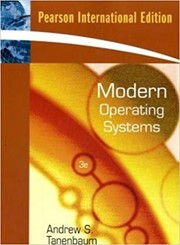 Modern Operating SystemsAndrew S. Tanenbaum, Herbert Bos · 1992
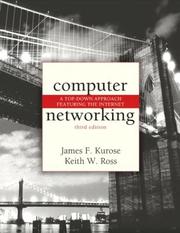 Computer networkingJames F. Kurose, Keith W. Ross · 1900
 The web application hacker's handbookDafydd Stuttard, Marcus Pinto · 2007
 Apache CookbookKen Coar, Rich Bowen · 2003
 The Conspirators HierarchyJohn Coleman · 1992
 TCP/IP IllustratedW. Richard Stevens, Kevin R. Fall · 1993
 Understanding Computers Today and TomorrowDeborah Morley · 2003
 PolygamyJ. H. Beadle · 1882
Ranked by number of editions on Open Library, a rough measure of how lasting a book is.
🔗 Related topics
- Virgil D. Gligor Virgil Dorin Gligor (born July 30, 1949) is a Romanian-American professor of electrical and computer engineering who specializes in the research of network…
- Cache prefetching Cache prefetching is a technique used by central processing units (CPUs) to boost execution performance by fetching instructions or data from their primary…
- Trevor Mudge Trevor Mudge is a computer scientist, academic and researcher. He is the Bredt Family Chair of Computer Science and Engineering, and Professor of Electrical…
- Keystroke inference attack Keystroke inference attacks are a class of privacy-invasive technique that allows attackers to infer what a user is typing on a keyboard. The origins of…
- Jean-Pierre Hubaux Jean-Pierre Hubaux is a Swiss-Belgian computer scientist specialised in security and privacy. He is a professor of computer science at EPFL (École Polytechnique…
- Mathias Payer Mathias Payer (born 1981) is a Liechtensteiner computer scientist. His research is invested in software and system security. He is Associate Professor…
- Non-interactive zero-knowledge proof Non-interactive zero-knowledge proofs are cryptographic primitives, where information between a prover and a verifier can be authenticated by the prover…
- Side-channel attack In computer security, a side-channel attack is a type of security exploit that uses information inadvertently leaked by a system—such as timing, power…