Live briefing

Everything about Bus (computing)
Data transfer channel connecting parts of a computer
In computer architecture, a bus is a communication system that transfers data between components inside a computer or, more rarely, between computers. It encompasses both hardware and software, including communication protocols. At its core, a bus is a shared physical pathway, typically composed of wires or traces on a circuit board, that allows multiple devices to communicate. Unlike networks, which route addressed packets across switches, buses use arbitration protocols to manage which device can transmit data over the shared pathway. Wikipedia →
🧭 Start here: a 6-step reading path
- Read the overview: Bus (computing)A 5-minute orientation
- Skim a recent paper: Edge Learning for B5G Networks With Distributed Signal Processing: Semantic Communication, Edge Computing, and Wireless SensingInfluential work since 2022
- Pick up a classic book: The Psychology of Everyday ThingsThe most-reprinted book on the subject
- Read the landmark paper: Cloud computing-based energy optimization control framework for plug-in hybrid electric busCited 84 times
- Go sideways: Serial communicationA closely related topic
- Go sideways: Expansion cardA closely related topic
📖 Definitions
No dictionary entry for this exact phrase.
🏆 Landmark papers (most cited)
Cloud computing-based energy optimization control framework for plug-in hybrid electric bus
A Power Flow Method Using a New Bus Type for Computing Steady-State Voltage Stability Margins
Spin-bus concept of spin quantum computing
Robust quantum gates and a bus architecture for quantum computing with rare-earth-ion-doped crystals
MBBNet: An edge IoT computing-based traffic light detection solution for autonomous bus
Privbus: A privacy-enhanced crowdsourced bus service via fog computing
SensingBus: Using Bus Lines and Fog Computing for Smart Sensing the City
Standards, tools & best practices - The universal remote console: a universal access bus for pervasive computing
🆕 Influential since 2022
Edge Learning for B5G Networks With Distributed Signal Processing: Semantic Communication, Edge Computing, and Wireless Sensing
Distributed Artificial Intelligence Empowered by End-Edge-Cloud Computing: A Survey
EC-SVC: Secure CAN Bus In-Vehicle Communications With Fine-Grained Access Control Based on Edge Computing
Dynamic contention-aware workflow scheduling on shared bus-based CPU-FPGA heterogeneous computing systems
Enhancing Urban Sensing: A Bus-Aided Two-Stage Framework for Vehicular Edge Computing
📚 Books worth reading
 The Psychology of Everyday ThingsDonald A. Norman · 1988
 Fieldbus and Networking in Process AutomationSunit Kumar Sen · 2014
 Think StatsAllen B. Downey · 2011
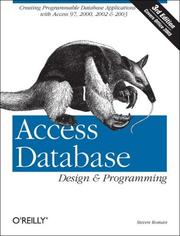 Access database design & programmingSteven Roman · 1997
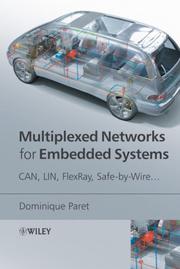 Multiplexed networks for embedded systemsDominique Paret · 2007
 Data science from scratchJoel Grus · 2015
 Blood, sweat, and pixelsJason Schreier · 2017
 USB Mass StorageJan Axelson · 2006
Ranked by number of editions on Open Library, a rough measure of how lasting a book is.
🔗 Related topics
- Serial communication In telecommunication and data transmission, serial communication is the process of sending data one bit at a time, sequentially, over a communication channel…
- Expansion card In computing, an expansion card, also known as an expansion board, adapter card, peripheral card or accessory card, is a printed circuit board that can…
- Low Pin Count The Low Pin Count (LPC) bus is a computer bus used on IBM-compatible personal computers to connect low-bandwidth devices to the CPU, such as the BIOS ROM…
- PCI Express PCI Express (Peripheral Component Interconnect Express), officially abbreviated as PCIe, is a high-speed standard used to connect hardware components inside…
- JTAG JTAG (named after the Joint Test Action Group, which codified it) is an industry standard for verifying designs of and testing printed circuit boards after…
- Industry Standard Architecture Industry Standard Architecture (ISA) is the 16-bit internal bus of IBM PC/AT and similar computers based on the Intel 80286 and its immediate successors…
- Parallel communication In data transmission, parallel communication is a method of conveying multiple binary digits (bits) simultaneously using multiple conductors. This contrasts…
- IEEE 1284 IEEE 1284, also known as the Centronics port, is a standard that defines bi-directional parallel communications between computers and other devices, with…