Live briefing
Everything about Browser security
Application of internet security to web browsers
Browser security is the application of Internet security to web browsers in order to protect networked data and computer systems from breaches of privacy or malware. Security exploits of browsers often use JavaScript, sometimes with cross-site scripting (XSS) with a secondary payload using Adobe Flash. Security exploits can also take advantage of vulnerabilities that are commonly exploited in all browsers. Wikipedia →
🧭 Start here: a 6-step reading path
- Read the overview: Browser securityA 5-minute orientation
- Skim a recent paper: A real-time machine learning application for browser extension security monitoringInfluential work since 2022
- Pick up a classic book: The Browser Hacker's HandbookThe most-reprinted book on the subject
- Read the landmark paper: Vetting browser extensions for security vulnerabilities with VEXCited 60 times
- Go sideways: Local shared objectA closely related topic
- Go sideways: Private browsingA closely related topic
📖 Definitions
No dictionary entry for this exact phrase.
🗂️ The subject at a glance
🏆 Landmark papers (most cited)
Vetting browser extensions for security vulnerabilities with VEX
Enhancing web browser security against malware extensions
Security Busters: Web browser security vs. rogue sites
Browser security
Browser-to-Browser Security Assurances for WebRTC
JavaScript instrumentation for browser security
Mobile cloud security: An adversary model for lightweight browser security
Browser Security: Lessons from Google Chrome
🆕 Influential since 2022
A real-time machine learning application for browser extension security monitoring
Assessing Browser Security: A Detailed Study Based on CVE Metrics
A comprehensive survey on mobile browser security issues, challenges and solutions
Toward Automated Formal Security Analysis of SAML V2.0 Web Browser SSO Standard—The POST/Artifact Use Case
Preserving Privacy and Security in Browser Case Study of Mantis Browser
📚 Books worth reading
 The Browser Hacker's HandbookWade Alcorn, Christian Frichot · 2014
 Wicket in actionMartijn Dashorst, Eelco Hillenius · 2008
 Hacking FirefoxMel Reyes · 2005
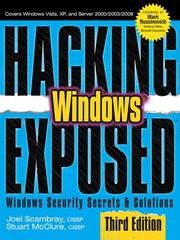 Hacking exposed WindowsJoel Scambray · 2008
 The tangled WebMichal Zalewski · 2011
- 📕Hai ke gong fang sheng jing =Wade Alcorn · 2015
Ranked by number of editions on Open Library, a rough measure of how lasting a book is.
🔗 Related topics
- Local shared object A local shared object (LSO), commonly called a Flash cookie (due to its similarity with an HTTP cookie), is a piece of data that websites that use Adobe…
- Private browsing Private browsing (also known as incognito mode or private mode) is a feature in most web browsers that enhances user privacy. In this mode, the browser…
- Link prefetching Link prefetching allows web browsers to pre-load resources. This speeds up both the loading and rendering of web pages. Prefetching was first introduced…
- Browser extension A browser extension is a software module for customizing a web browser. Browsers typically allow users to install a variety of extensions, including user…
- NoScript NoScript (or NoScript Security Suite) is a free and open-source extension for Firefox- and Chromium-based web browsers, written and maintained by Giorgio…
- Comparison of web browsers A web browser is an application that allows you to access and view websites and other content on the internet. Different browsers have their own strengths…
- Comodo Dragon Comodo Dragon is a discontinued freeware web browser based on Chromium and produced by Comodo Group. Sporting a similar interface to Google Chrome, Dragon…
- Clickjacking Clickjacking (classified as a user interface redress attack or UI redressing) is a malicious technique of tricking a user into clicking on something different…