Live briefing

Everything about Brian
Male given name
Brian is a masculine given name of Irish and Breton origin, as well as a surname of Occitan origin. It is common in the English-speaking world. Wikipedia →
🧭 Start here: a 6-step reading path
- Read the overview: BrianA 5-minute orientation
- Skim a recent paper: Brian2Loihi: An emulator for the neuromorphic chip Loihi using the spiking neural network simulator BrianInfluential work since 2022
- Pick up a classic book: Many Lives, Many MastersThe most-reprinted book on the subject
- Read the landmark paper: Brian 2, an intuitive and efficient neural simulatorCited 813 times
- Go sideways: ChrisA closely related topic
- Go sideways: DarrenA closely related topic
📖 Definitions
Verb To keep fire at the mouth of (as of an oven), to give light or to preserve heat.
🏆 Landmark papers (most cited)
Brian 2, an intuitive and efficient neural simulator
A critical review of the diagnosis and management of Barrett’s esophagus: the AGA Chicago Workshop1 1Members of the workshop composed a group of international experts in BE from gastroenterology, surgery, pathology, molecular biology, outcomes, and epidemiology. Conference chairman: Prateek Sharma; conference moderator: Kenneth McQuaid; group leaders: John Dent, M. Brian Fennerty, Richard Sampliner, Stuart Spechler; participants: Alan Cameron, Douglas Corley, Gary Falk, John Goldblum, John Hunter, Janusz Jankowski, Lars Lundell, Brian Reid, Nicholas Shaheen, Amnon Sonnenberg, Kenneth Wang, and Wilfred Weinstein.
The Brian simulator
Brian: a simulator for spiking neural networks in Python
A New Type of Heteropolyoxometalates formed from Lacunary Polyoxotungstate Ions and Europium or Yttrium Cations We gratefully acknowledge Dr. Gerard Parkin and Dr. Brian Bridgewater for the use of the diffractometer at Columbia University and helpful discussions. Supported by NSF-CHE9502213, NIH-GM60654-01 (LCF), NIH-MARC (FGP), NSF-CHE-9705788 (W.D.H), and NSF Grant PCM8111745 for the purchase of the 400 MHz Spectrometer. Infrastructure at Hunter College is supported in part by NIH-Research Centers in Minority Institutions Grant RR03037-08S2.
Pseudorational local rings and a theorem of Brian\c con-Skoda about integral closures of ideals.
Problems of Population Theory Obligations to Future Generations . R. I. Sikora , Brian Barry
Localization of neuropeptide Y messenger ribonucleic acid in rat and mouse brian by in situ hybridization
🆕 Influential since 2022
Brian2Loihi: An emulator for the neuromorphic chip Loihi using the spiking neural network simulator Brian
Traumatic Brian Injury (TBI) unraveled: molecular disruptions and therapeutic avenues
Seventh Sense Research Group Home Journals For Authors For Editors For Reviewers Call for Paper May 2023 IJEEE Aim & Scope Editorial Board Paper Submission Current Issue Archives Publication Ethics Guidelines for Authors Guidelines for Editors Guidelines for Reviewer Indexing Article Processing charges Mode of Payment for APC Paper Template Copyright Form Alcohol Sensing Device using Glass Substrates Coated with Agarose Gel and HEC/PVDF Nanomaterial International Journal of Electrical and Electronics Engineering © 2023 by SSRG - IJEEE Journal Volume 10 Issue 4 Year of Publication : 2023 Authors : Marlina Jahava, Mohd Hafiz Jali, Danusha Pillai, Haziezol Helmi Mohd Yusof, Md. Ashadi Md Johari, Aminah Ahmad, Siti Halma Johari, Sulaiman Wadi Harun, Siddharth Thokchom 10.14445/23488379/IJEEE-V10I4P104 pdf How to Cite? Marlina Jahava, Mohd Hafiz Jali, Danusha Pillai, Haziezol Helmi Mohd Yusof, Md. Ashadi Md Johari, Aminah Ahmad, Siti Halma Johari, Sulaiman Wadi Harun, Siddharth Thokchom, "Alcohol Sensing Device using Glass Substrates Coated with Agarose Gel and HEC/PVDF Nanomaterial," SSRG International Journal of Electrical and Electronics Engineering, vol. 10, no. 4, pp. 37-45, 2023. Crossref, https://doi.org/10.14445/23488379/IJEEE-V10I4P104 Abstract: This paper reported the development of an alcohol sensor based on a glass substrate platform. The glass substrate was coated with two nanomaterial types: Hydroxyethylcellulose/Polyvinylidene fluoride (HEC/PVDF) and Agarose Gel, for comparison purposes. Three layers of coating material have been applied to the glass substrate to obtain the optimum sensing response. The coated glass substrate is kept dry for 24 hours before expose to variations of ethanol concentration to investigate the sensing response. A significant response to alcohol concentrations has been observed for both samples due to the changeable refractive index layer of the coating material. The sensitivity improved by a factor of 1.18 and 1.51, respectively, compared to the bared glass. The proposed sensor employed low-cost and commercially available components such as a glass substrate, LED light source and Arduino microcontroller to perform as an alcohol sensor. It prevents using expensive laser-based sensors, which is less practical in real industrial applications. Based on the experiment results, the HEC/PVDF-coated glass produced has demonstrated better results in terms of repeatability, hysteresis, stability and sensitivity as compared to agarose gel-coated glass. Hence the proposed sensor has a decent potential as an alcohol sensor Keywords: Alcohol sensor, Glass substrate, HEC/PVDF, Agarose gel. References: [1] G. Ayares et al., "Public Health Measures and Prevention of Alcohol-Associated Liver Disease," Journal of Clinical and Experimental Hepatology, vol. 12, no. 6, pp. 1480-1491, 2022. [CrossRef] [Google Scholar] [Publisher Link] [2] E. Scafato et al., "The Undertreatment of Alcohol-Related Liver Diseases Among People with Alcohol Use Disorder," European Review for Medical and Pharmacological Sciences, vol. 24, no. 2, pp. 974-982, 2020. [CrossRef] [Google Scholar] [Publisher Link] [3] Izanoordina Ahmad, Muhammad Firdaus Suhaimi, and Nur Asfarina Nasuha Yusri, "Development of Alcohol Sensor Detector with Engine Locking System for Accident Prevention," AIP Conference Proceedings, p. 020196, 2019. [CrossRef] [Google Scholar] [Publisher Link] [4] James C. Fell et al., "The Impact of Underage Drinking Laws on Alcohol-Related Fatal Crashes of Young Drivers," Alcoholism: Clinical and Experimental Research, vol. 33, pp. 1208-1219, 2009. [CrossRef] [Google Scholar] [Publisher Link] [5] Nicholas V. Emanuele, Terrence F. Swade, and Mary Ann Emanuele,, "Consequences of Alcohol Use in Diabetics," Alcohol Health and Research World, vol. 22, no. 3, pp. 211-219, 1998. [Google Scholar] [Publisher Link] [6] Zijie Lin et al., "Evaluation and Review of Ways to Differentiate Sources of Ethanol in Postmortem Blood," International Journal of Legal Medicine, vol. 134, no. 6, pp. 2081-2093, 2020. [CrossRef] [Google Scholar] [Publisher Link] [7] Delvin Sidqey, Veronica Horpestad Liane, and Lena Kristoffersen, "Quantitative Determination of Ethyl Glucuronide and Ethyl Sulfate in Postmortem and Antemortem Whole Blood Using Phospholipid Removal 96-Well Plate and UHPLC–MS-MS," Journal of Analytical Toxicology, vol. 45, no. 4, pp. 378-388, 2021. [CrossRef] [Google Scholar] [Publisher Link] [8] Dr.A.Bhavana, and M.Johnkarol, "Tensile, Thermal, and Morphological Belongings, with Consumption of Agro Ravage Polymers into PVC/NBR Alloys," SSRG International Journal of Chemical Engineering Research, vol. 2, no. 1, pp. 11-14, 2015. [CrossRef] [Publisher Link] [9] E. Filippo, A. Serra, and D. Manno, "Poly (Vinyl Alcohol) Capped Silver Nanoparticles as Localized Surface Plasmon Resonance-Based Hydrogen Peroxide Sensor," Sensors and Actuators B: Chemical, vol. 138, no. 2, pp. 625-630, 2009. [CrossRef] [Google Scholar] [Publisher Link] [10] Lufsyi Mahmudin et al., "Optical Properties of Silver Nanoparticles for Surface Plasmon Resonance (SPR)-Based Biosensor Applications," Journal of Modern Physics, vol. 6, pp. 1071-1076, 2015. [CrossRef] [Google Scholar] [Publisher Link] [11] Colette McDonagh, Conor S. Burke, and Brian D. MacCraith, "Optical Chemical Sensors," Chemical Reviews, vol. 108, pp. 400-422, 2008. [CrossRef] [Google Scholar] [Publisher Link] [12] Jinjun Shi et al., "Recent Developments in Nanomaterial Optical Sensors," TrAC Trends in Analytical Chemistry, vol. 23, no. 5, pp. 351-360, 2004. [CrossRef] [Google Scholar] [Publisher Link] [13] Yuan-Qing Li, Shao-Yun Fu, and Yiu-Wing Mai, "Preparation and Characterization of Transparent Zno/Epoxy Nanocomposites with High-UV Shielding Efficiency," Polymer, vol. 47, no. 6, pp. 2127-2132, 2006. [CrossRef] [Google Scholar] [Publisher Link] [14] Zohra Nazir Kayani et al., "Fabrication and Properties of Zinc Oxide Thin Film Prepared by Sol-Gel Dip Coating Method," Materials Science-Poland, vol. 33, pp. 515-520, 2015. [CrossRef] [Google Scholar] [Publisher Link] [15] Affa Rozana Abdul Rashid et al., "ZnO Coated Optical Fiber for Alcohol Sensing Applications," Solid State Phenomena, pp. 70-77, 2020. [CrossRef] [Google Scholar] [Publisher Link] [16] Kyu J. Lee et al., "Agarose-Gel Based Guided-Mode Resonance Humidity Sensor," IEEE Sensors Journal, vol. 7, no. 3, pp. 409-414, 2007. [CrossRef] [Google Scholar] [Publisher Link] [17] M. Batumalay et al., "Study of a Fiber Optic Humidity Sensor Based on Agarose Gel," Journal of Modern Optics, vol. 61, pp. 244-248, 2014. [CrossRef] [Google Scholar] [Publisher Link] [18] Malathy Batumalay et al., "Tapered Plastic Optical Fiber Coated With Graphene for Uric Acid Detection," IEEE Sensors Journal, vol. 14, no. 5, pp. 1704-1709, 2014. [CrossRef] [Google Scholar] [Publisher Link] [19] Alice Bukola Olanipekun, "Lattice Dynamics of Mixed Divalent Metal Fluorides," SSRG International Journal of Applied Physics, vol. 9, no. 1, pp. 12-16, 2022. [CrossRef] [Google Scholar] [Publisher Link] [20] Mohd Hafiz Jali et al., "Humidity Sensing Using Microfiber-Zno Nanorods Coated Glass Structure," Optik, vol. 238, p. 166715, 2021. [CrossRef] [Google Scholar] [Publisher Link] [21] Md Ashadi Md Johari et al., "Polyvinyl Alcohol Coating Microbottle Resonator on Whispering Gallery Modes for Ethanol Liquid Sensor," Optics & Laser Technology, vol. 143, p. 107379, 2021. [CrossRef] [Google Scholar] [Publisher Link] [22] Huda Adnan Zain et al., "Agarose Coated Micro-Bottle Sensor for Relative Humidity Detection," Optoelectronics Letters, vol. 17, pp. 328-333, 2021. [CrossRef] [Google Scholar] [Publisher Link] [23] Susana Novais, Marta S. Ferreira, and João L. Pinto, "Relative Humidity Fiber Sensor Based on Multimode Interferometer Coated with Agarose-Gel," Coatings, vol. 8, p. 453, 2018. [CrossRef] [Google Scholar] [Publisher Link] [24] Mohd Hafiz Jali et al., "Effect of HEC/PVDF Coating on Glass Substrate for Formaldehyde Concentration Sensing," PrzeglĄd Elektrotechniczny, vol. 98, no. 4, pp. 40-43, 2022. [CrossRef] [Google Scholar] [Publisher Link] [25] H. A. Zain et al., "HEC/PVDF Coated Microbottle Resonators for Relative Humidity Detection," Optik, vol. 232, p. 166534, 2021. [CrossRef] [Google Scholar] [Publisher Link] [26] M. O'Toole and D. Diamond, "Absorbance Based Light Emitting Diode Optical Sensors and Sensing Devices," Sensors, vol. 8, no. 4, pp. 2453-2479, 2008. [CrossRef] [Google Scholar] [Publisher Link] [27] Sarah A. Elawam et al., "Structural Configuration and Thermal Analyses of Composite Films of Poly (methyl methacrylate)/Lead Oxide Nanoparticles," SSRG International Journal of Applied Physics, vol. 3, no. 3, pp. 6-14, 2016. [CrossRef] [Google Scholar] [Publisher Link] [28] Masayuki Morisawa, and Shinzo Muto, "Plastic Optical Fiber Sensing of Alcohol Concentration in Liquors," Journal of Sensors, vol. 2012, 2012. [CrossRef] [Google Scholar] [Publisher Link] [29] Hasnida Saad, Mohd Tarmizi Ali, and M. Kamil Abd Rahman, "High Sensitivity Optical POF Sensor for Detecting Low Ethanol Concentration in Water," Advanced Materials Research, pp. 693-698, 2015. [CrossRef] [Google Scholar] [Publisher Link] [30] Ismel Dominguez et al., "Dually Nanocoated Planar Waveguides Towards Multi-Parameter Sensing," Scientific Reports, vol. 11, p. 3669, 2021. [CrossRef] [Google Scholar] [Publisher Link] [31] Riya Alice B. John, and A. Ruban Kumar, "A Review on Resistive-Based Gas Sensors for the Detection of Volatile Organic Compounds Using Metal-Oxide Nanostructures," Inorganic Chemistry Communications, vol. 133, p. 108893, 2021. [CrossRef] [Google Scholar] [Publisher Link] [32] Yali Cheng et al., "Low Cost Fabrication of Highly Sensitive Ethanol Sensor Based on Pd-Doped Α-Fe2O3 Porous Nanotubes," Materials Research Bulletin, vol. 105, pp. 21-27, 2018. [CrossRef] [Google Scholar] [Publisher Link] [33] K. Arunganesh et al., "Smart Voltage Protection System for Industries," International Journal of Electrical and Electronics Engineering, vol. 8, pp. 5-12, 2021. [CrossRef] [Publisher Link] [34] Mohd Hafiz Jali et al., "Agarose Gel Coated Glass Substrate for Formaldehyde Sensing Application," PrzeglĄd Elektrotechniczny, vol. 1, pp. 97-101, 2022. [CrossRef] [Publisher Link] [35] Gerd H. Woehrle, Marvin G. Warner, and James E. Hutchison, "Molecular-Level Control of Feature Separation in One-Dimensional Nanostructure Assemblies Formed by Biomolecular Nanolithography," Langmuir, vol. 20, pp. 5982-5988, 2004. [CrossRef] [Google Scholar] [Publisher Link] [36] M. Batumalay et al., "Tapered Plastic Optical Fiber Coated with Zno Nanostructures for the Measurement of Uric Acid Concentrations and Changes in Relative Humidity," Sensors and actuators A: Physical, vol. 210, pp. 190-196, 2014. [CrossRef] [Google Scholar] [Publisher Link] [37] Feng-Bo Yang et al., "A Low-Cost Light-Emitting Diode Induced Fluorescence Detector for Capillary Electrophoresis Based on an Orthogonal Optical Arrangement," Talanta, vol. 78, no. 3, pp. 1155-1158, 2009. [CrossRef] [Google Scholar] [Publisher Link] Quick Links Home Journals Call For Paper Authors Paper submission Preparation Guidelines Review Process Editors Reviewer Guidelines Join as Editor Special Issue Proposal Events Conferences Awards Special Issues SSRG Contact Us Indexing Follow Us Facebook Linkedin Twitter © SSRG International Journals - All right reserved Creative Commons License SSRG site and its metadata are licensed under CC BY-NC-ND Designed by VTS
Comment on “Early Archean biogeochemical iron cycling and nutrient availability: New insights from a 3.5 Ga land-sea transition” by Clark M. Johnson, Xin-Yuan Zheng, Tara Djokic, Martin J. Van Kranendonk, Andrew D. Czaja, Eric E. Roden, Brian L. Beard, 2022, Earth-Science Reviews, https://doi.org/10.1016/j.earscirev.2022.103992
Clinical Feasibility of Automated Brain Tissue and Myelin Volumetry of Normal Brian Using Synthetic Magnetic Resonance Imaging With Fast Imaging Protocol: A Single-Center Pilot Study
📚 Books worth reading
 Many Lives, Many MastersBrian L. Weiss · 1988
 Tourist SeasonCarl Hiaasen · 1986
 Brian's HuntGary Paulsen · 2003
 Brian's songWilliam Blinn · 1972
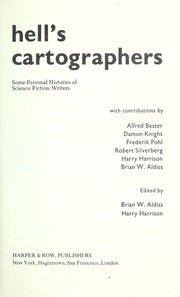 Hell's cartographers : some personal histories of science fiction writersBrian W. Aldiss, Alfred Bester · 1975
 JusticeDan Mahoney · 2003
 Life of BrianMonty Python · 1979
 Brian PiccoloJeannie Morris · 1611
Ranked by number of editions on Open Library, a rough measure of how lasting a book is.
🔗 Related topics
- Chris Chris is a short form of various names including Christopher, Christian, Christina, and Christine. Chris is also used as a name in its own right, but it…
- Darren Darren is a masculine given name of uncertain etymological origins. Some theories state that it originated from an Anglicisation of the Irish first name…
- Steve Steve is a masculine given name, usually a short form (hypocorism) of Steven or Stephen. Steve Abbott (disambiguation), several people Steve Abel (born…
- Donald Donald is a Scottish masculine given name. It is derived from the Gaelic name Dòmhnall. This comes from the Proto-Celtic *Dumno-ualos ("world-ruler" or…
- Sweeney (name) Sweeney is a surname that is of Irish origin, derived from the Gaelic Mac Suibhne meaning "son of Suibhne". The Gaelic personal name Suibhne was originally…
- Keenan Keenan is an Irish surname meaning 'ancient, distant' in the Irish language. It is derived from Ó Cianáin 'descendant of Cianán' (a diminutive of Cian)…
- Bryan (given name) Bryan is a masculine given name. It is a variant spelling of the masculine given name Brian. The given name Bryan is a variant of the given name Brian…
- Doyle Doyle is a surname of Irish origin. The name is a back-formation from O'Doyle, which is an Anglicisation of the Irish Ó Dubhghaill (pronounced [oː ˈd̪ˠʊwəl̠ʲ])…