Everything about Brake
Mechanical device that inhibits motion

A brake is a mechanical device that inhibits motion by absorbing energy from a moving system. It is used for slowing or stopping a moving vehicle, wheel, axle, or to prevent its motion, most often accomplished by means of friction. Wikipedia →
🧭 Start here: a 6-step reading path
- Read the overview: BrakeA 5-minute orientation
- Skim a recent paper: Releasing a sugar brake generates sweeter tomato without yield penaltyInfluential work since 2022
- Pick up a classic book: Up-to-date air-brake catechismThe most-reprinted book on the subject
- Read the landmark paper: Brake wear particle emissions: a reviewCited 921 times
- Go sideways: Drum brakeA closely related topic
- Go sideways: Brake fadeA closely related topic
📖 Definitions
Noun A device used to slow or stop the motion of a wheel, or of a vehicle, usually by friction (although other resistive forces, such as electromagnetic fields or aerodynamic drag, can also be used); also, the controls or apparatus used to engage such a mechanism such as the pedal in a car.
Noun The act of braking, of using a brake to slow down a machine or vehicle
Noun An apparatus for testing the power of a steam engine or other motor by weighing the amount of friction that the motor will overcome; a friction brake.
Noun Something used to retard or stop some action, process etc.
🗂️ The subject at a glance
🏆 Landmark papers (most cited)
Brake wear particle emissions: a review
miR-146a is a significant brake on autoimmunity, myeloproliferation, and cancer in mice
"How Long Does It Take to Stop?" Methodological Analysis of Driver Perception-Brake Times
Pharmacological brake-release of mRNA translation enhances cognitive memory
Automotive disc brake squeal
Sources of fine organic aerosol. 3. Road dust, tire debris, and organometallic brake lining dust: roads as sources and sinks
Estimation of the Contributions of Brake Dust, Tire Wear, and Resuspension to Nonexhaust Traffic Particles Derived from Atmospheric Measurements
Brake Wear Particulate Matter Emissions
🆕 Influential since 2022
Releasing a sugar brake generates sweeter tomato without yield penalty
Effective utilization of surface-processed/untreated Cardiospermum halicababum agro-waste fiber for automobile brake pads and its tribological performance
CLE14 functions as a “brake signal” to suppress age-dependent and stress-induced leaf senescence by promoting JUB1-mediated ROS scavenging in Arabidopsis
Metal Matrix Composite Brake Rotor: Historical Development and Product Life Cycle Analysis
Sustainable characterization of brake pads using raw/silane‐treated Mimosa pudica fibers for automobile applications
📚 Books worth reading
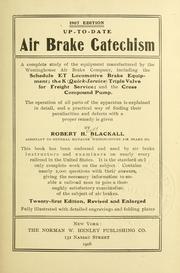 Up-to-date air-brake catechismRobert H. Blackall · 1898
 Today's TechnicianKen Pickerill · 2014
 Automotive brake systemsJames D. Halderman · 1996
- 📕Analysis techniques for racecar data acquisitionJorge Segers · 2008
 Automotive braking systemsBirch, Thomas W., Tom Birch · 1988
 Brake design and safetyRudolf Limpert · 1992
 Auto brakesChris Johanson, Martin T. Stockel · 2004
 Braking of Road VehiclesAndrew J. Day · 2014
Ranked by number of editions on Open Library, a rough measure of how lasting a book is.
🔗 Related topics
- Drum brake A drum brake is a brake that uses friction caused by a set of shoes or pads that press outward against a rotating bowl-shaped part called a brake drum…
- Brake fade Brake fade (or vehicle braking system fade) is the reduction in stopping power that can occur after repeated or sustained application of the brakes of…
- Hydraulic brake A hydraulic brake is an arrangement of braking mechanism which uses brake fluid, typically containing glycol ethers or diethylene glycol, to transfer pressure…
- Disc brake A disc brake is a type of brake that uses the calipers to squeeze pairs of pads against a disc (sometimes called a [brake] rotor) to create friction. There…
- Power brakes Power brakes consist of a system of hydraulics used to slow down or stop a motor vehicle. It uses a combination of mechanical components and vacuum assistance…
- Eddy current brake An eddy current brake, also known as an induction brake, Faraday brake, electric brake or electric retarder, is a device used to slow or stop a moving…
- Bicycle brake A bicycle brake reduces the speed of a bicycle or prevents the wheels from moving. The two main types are: rim brakes and disc brakes. Drum brakes are…
- Clutch A clutch is a mechanical device that allows an output shaft to be disconnected from a rotating input shaft. The clutch's input shaft is typically attached…