Live briefing
Everything about Body schema
Postural model that keeps track of limb position
Body schema is an organism's internal model of its own body, including the position of its limbs. The neurologist Sir Henry Head originally defined it as a postural model of the body that actively organizes and modifies 'the impressions produced by incoming sensory impulses in such a way that the final sensation of body position, or of locality, rises into consciousness charged with a relation to something that has happened before'. As a postural model that keeps track of limb position, it plays an important role in control of action. Wikipedia →
🧭 Start here: a 6-step reading path
- Read the overview: Body schemaA 5-minute orientation
- Skim a recent paper: Body Image and Body Schema in Adolescents with Idiopathic Scoliosis: A Scoping ReviewInfluential work since 2022
- Pick up a classic book: Body processThe most-reprinted book on the subject
- Read the landmark paper: Tools for the body (schema)Cited 1,044 times
- Go sideways: Michael GrazianoA closely related topic
- Go sideways: Sensory processingA closely related topic
📖 Definitions
No dictionary entry for this exact phrase.
🗂️ The subject at a glance
🏆 Landmark papers (most cited)
Tools for the body (schema)
Body schema and body image—Pros and cons
Tool-use induces morphological updating of the body schema
Body Schema in Robotics: A Review
Body image: A cognitive self-schema construct?
Vestibular stimulation modifies the body schema
How do the body schema and the body image interact?
Distorted body image influences body schema in individuals with negative bodily attitudes
🆕 Influential since 2022
Body Image and Body Schema in Adolescents with Idiopathic Scoliosis: A Scoping Review
Beyond body image: what body schema and motor imagery can tell us about the way patients with anorexia nervosa experience their body
Emergence of sense of body ownership but not agency during virtual tool-use training is associated with an altered body schema
Body image disturbance, interoceptive sensibility and the body schema across female adulthood: a pre-registered study
Multiple representations of the body schema for the same body part
📚 Books worth reading
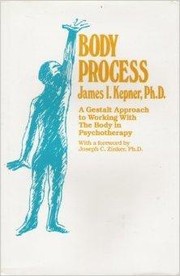 Body processJames I. Kepner · 1987
 The Image and Appearance of the Human BodyPaul Schilder · 1935
- 📕Little Susy's little servantsElizabeth Prentiss · 1856
 Body mattersSue Scott, Morgan, David · 1993
 Unconscious IncarnationsJohn Panteleimon Manoussakis, David M. Goodman · 2018
 The somatosensory systemRandall J. Nelson · 2001
 Never satisfiedHillel Schwartz, Hillel Schwartz · 1986
 The betrayal of the bodyAlexander Lowen · 1967
Ranked by number of editions on Open Library, a rough measure of how lasting a book is.
🔗 Related topics
- Michael Graziano Michael Steven Anthony Graziano (born May 22, 1967) is an American scientist and novelist who is currently a professor of psychology and neuroscience at…
- Sensory processing Sensory processing is the process that organizes and distinguishes sensation (sensory information) from one's own body and the environment, thus making…
- Dyschiria Dyschiria, also known as dyschiric syndrome, is a neurological disorder where one-half of an individual's body or space cannot be recognized or cannot…
- Hemispatial neglect Hemispatial neglect is a neuropsychological condition in which, after damage to one hemisphere of the brain (e.g. after a stroke), a deficit in attention…
- Parietal lobe The parietal lobe is one of the four major lobes of the cerebral cortex in brains. The parietal lobe is positioned above the temporal lobe and behind the…
- Multisensory integration Multisensory integration, also known as multimodal integration, is the study of how information from the different sensory modalities (such as sight, hearing…
- Body transfer illusion Body transfer illusion is the illusion of owning either a part of a body or an entire body other than one's own, thus it is sometimes referred to as "body…
- Tactile hallucination Tactile hallucination is the false perception of tactile sensory input that creates a hallucinatory sensation of physical contact with an imaginary object…