Live briefing
Everything about Binary-code compatibility
Ability of computer system to run code for a different system
Binary-code compatibility is a property of a computer system, meaning that it can run the same executable code, typically machine code for a general-purpose computer central processing unit (CPU), that another computer system can run. Source-code compatibility, on the other hand, means that recompilation or interpretation is necessary before the program can be run on the compatible system. Wikipedia →
🧭 Start here: a 6-step reading path
- Read the overview: Binary-code compatibilityA 5-minute orientation
- Pick up a classic book: An introduction to computer scienceThe most-reprinted book on the subject
- Go sideways: Compatibility layerA closely related topic
- Go sideways: Computing platformA closely related topic
📖 Definitions
No dictionary entry for this exact phrase.
🗂️ The subject at a glance
🏆 Landmark papers (most cited)
- No matching papers found.
📚 Books worth reading
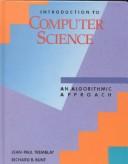 An introduction to computer scienceJean-Paul Tremblay, Richard B. Bunt · 1979
 Data structures & algorithm analysis in JavaMark Allen Weiss · 1999
 Principles of gene manipulation and genomicsS. B. Primrose · 2006
 Information HidingMatthias Kirchner · 2013
 Discrete mathematical structures with applications to computer scienceJean-Paul Tremblay · 1975
 Programming with turing and object oriented turingPeter Grogono · 1995
 Complete visualizing technologyDebra Geoghan · 2013
 Discrete MathmaticsR. K. Bisht, H. S. Dhami · 2015
Ranked by number of editions on Open Library, a rough measure of how lasting a book is.
🔗 Related topics
- Compatibility layer In software engineering, a compatibility layer is an interface that allows binaries for a legacy or foreign system to run on a host system. This translates…
- Computing platform A computing platform, digital platform, or software platform is the infrastructure on which software is executed. While the individual components of a…
- Cross-platform software Within computing, cross-platform software (also called multi-platform software, platform-agnostic software, or platform-independent software) is computer…
- Hardware abstraction A hardware abstraction is software that provides access to hardware in a way that hides details that might otherwise make using the hardware difficult…
- Application binary interface An application binary interface (ABI) is an interface exposed by software that is defined for in-process machine code access. Often, the exposing software…
- List of emulators This article lists software emulators. ARMulator Aemulor QEMU SPIM: The OVPsim 500 mips MIPS32 emulator, can be used to develop software using virtual…
- Executable-space protection In computer security, executable-space protection marks memory regions as non-executable, such that an attempt to execute machine code in these regions…
- Executable and Linkable Format In computing, the Executable and Linkable Format (ELF, formerly named Extensible Linking Format) is a common standard file format for executable files…