Everything about Beta rectangular distribution
Concept in statistics

In probability theory and statistics, the beta rectangular distribution is a probability distribution that is a finite mixture distribution of the beta distribution and the continuous uniform distribution. The support of the distribution is indicated by the parameters a and b, which are the minimum and maximum values respectively. The distribution provides an alternative to the beta distribution such that it allows more density to be placed at the extremes of the bounded interval of support. Thus it is a bounded distribution that allows for outliers to have a greater chance of occurring than does the beta distribution. Wikipedia →
🧭 Start here: a 6-step reading path
- Read the overview: Beta rectangular distributionA 5-minute orientation
- Pick up a classic book: Mathematical Methods in the Physical SciencesThe most-reprinted book on the subject
- Read the landmark paper: Análisis clásico y bayesiano en la distribución beta rectangularCited 0 times
- Go sideways: Beta prime distributionA closely related topic
- Go sideways: Jacobi polynomialsA closely related topic
📖 Definitions
No dictionary entry for this exact phrase.
🗂️ The subject at a glance
🏆 Landmark papers (most cited)
📚 Books worth reading
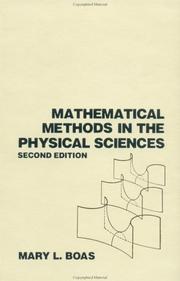 Mathematical Methods in the Physical SciencesMary L. Boas, Mary Layne Boas · 1966
 Foundation designN. S. V. Kameswara Rao · 2011
Ranked by number of editions on Open Library, a rough measure of how lasting a book is.
🔗 Related topics
- Beta prime distribution In probability theory and statistics, the beta prime distribution (also known as inverted beta distribution or beta distribution of the second kind) is…
- Jacobi polynomials In mathematics, Jacobi polynomials (occasionally called hypergeometric polynomials) P n ( α , β ) ( x ) {\displaystyle P_{n}^{(\alpha ,\beta )}(x)} are…
- Inverse-gamma distribution In probability theory and statistics, the inverse gamma distribution is a two-parameter family of continuous probability distributions on the positive…
- List of convolutions of probability distributions In probability theory, the probability distribution of the sum of two or more independent random variables is the convolution of their individual distributions…
- Conjugate prior In Bayesian probability theory, if, given a likelihood function p ( x ∣ θ ) {\displaystyle p(x\mid \theta )} , the posterior distribution p ( θ ∣ x ) {\displays…
- Shifted log-logistic distribution The shifted log-logistic distribution is a probability distribution also known as the generalized log-logistic or the three-parameter log-logistic distribution…
- Unit Weibull distribution The unit-Weibull distribution (UW) is a continuous probability distribution with domain on ( 0 , 1 ) {\displaystyle (0,1)} . Useful for indices and rates…
- Generalized inverse Gaussian distribution In probability theory and statistics, the generalized inverse Gaussian distribution (GIG) is a three-parameter family of continuous probability distributions…