Everything about Bargaining
Negotiation between a buyer and seller over the price and nature of their transaction

In the social sciences, bargaining or haggling is a type of negotiation in which the buyer and seller of a good or service debate the price or nature of a transaction. If the bargaining produces agreement on terms, the transaction takes place. It is often commonplace in poorer countries, or poorer localities within any specific country. Haggling can mostly be seen within street markets worldwide, wherein there remains no guarantee of the origin and authenticity of available products. Many people attribute it as a skill, but there remains no guarantee that the price put forth by the buyer would be acknowledged by the seller, resulting in losses of profit and even turnover in some cases. A growth in the country's GDP Per Capita Income is bound to reduce both the ill-effects of bargaining and the unscrupulous practices undertaken by vendors at street markets. Wikipedia →
🧭 Start here: a 6-step reading path
- Read the overview: BargainingA 5-minute orientation
- Skim a recent paper: Risk-averse stochastic capacity planning and P2P trading collaborative optimization for multi-energy microgrids considering carbon emission limitations: An asymmetric Nash bargaining approachInfluential work since 2022
- Pick up a classic book: Labor relationsThe most-reprinted book on the subject
- Read the landmark paper: The Bargaining ProblemCited 5,744 times
- Go sideways: Bilateral monopolyA closely related topic
- Go sideways: Sequential bargainingA closely related topic
📖 Definitions
Verb present participle and gerund of bargain
Noun The act of one who bargains.
🗂️ The subject at a glance
🏆 Landmark papers (most cited)
The Bargaining Problem
Perfect Equilibrium in a Bargaining Model
An experimental analysis of ultimatum bargaining
Knowledge, Bargaining Power, and the Instability of International Joint Ventures
BARGAINING WITH PATRIARCHY
Fairness in Simple Bargaining Experiments
The Nash Bargaining Solution in Economic Modelling
Incentive Compatibility and the Bargaining Problem
🆕 Influential since 2022
Risk-averse stochastic capacity planning and P2P trading collaborative optimization for multi-energy microgrids considering carbon emission limitations: An asymmetric Nash bargaining approach
Multi-microgrid low-carbon economy operation strategy considering both source and load uncertainty: A Nash bargaining approach
A bargaining game-based profit allocation method for the wind-hydrogen-storage combined system
Decentralized coordinated operation model of VPP and P2H systems based on stochastic-bargaining game considering multiple uncertainties and carbon cost
A bargaining game based feedback mechanism to support consensus in dynamic social network group decision making
📚 Books worth reading
 Labor relationsArthur A. Sloane · 1967
 Labor relationsJohn A. Fossum · 1979
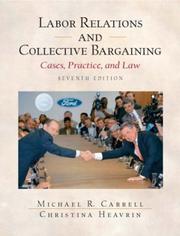 Labor relations and collective bargainingMichael R. Carrell, Christina Heavrin · 1995
 Labor relations in the public sectorRichard C. Kearney · 1984
 How to negotiate the labor agreementBruce Morse · 1963
 An introduction to collective bargaining and industrial relationsHarry Charles Katz, Harry C. Katz · 1991
 Roy LichtensteinRoy Lichtenstein, Diane Waldman · 1969
 Collective bargaining in SwedenJohnston, T. L. · 1962
Ranked by number of editions on Open Library, a rough measure of how lasting a book is.
🔗 Related topics
- Bilateral monopoly A bilateral monopoly is a market structure consisting of both a monopoly (a single seller) and a monopsony (a single buyer). Bilateral monopoly is a market…
- Sequential bargaining Sequential bargaining (also known as alternate-moves bargaining, alternating-offers protocol, etc.) is a structured form of bargaining between two participants…
- Cooperative bargaining Cooperative bargaining is a process in which two people decide how to share a surplus that they can jointly generate. In many cases, the surplus created…
- Bargaining power Bargaining power is the relative ability of parties in a negotiation (such as bargaining, contract writing, or making an agreement) to exert influence…
- Reservation price In economics, a reservation (or reserve) price is a limit on the price of a good or a service. On the demand side, it is the highest price that a buyer…
- Double auction A double auction is a process of buying and selling goods with multiple sellers and multiple buyers. Potential buyers submit their bids and potential sellers…
- Revelation principle The revelation principle is a fundamental result in mechanism design, social choice theory, and game theory which shows it is always possible to design…
- Best alternative to a negotiated agreement In negotiation theory, the best alternative to a negotiated agreement (BATNA) is the most favorable and independent course of action a party can take if…