Live briefing
Everything about Bandwidth compression
In telecommunications, the term bandwidth compression has the following meanings:The reduction of the bandwidth needed to transmit a given amount of data in a given time. The reduction of the time needed to transmit a given amount of data in a given bandwidth. Wikipedia →
🧭 Start here: a 6-step reading path
- Read the overview: Bandwidth compressionA 5-minute orientation
- Skim a recent paper: Multi-resource fair allocation with bandwidth requirement compression in the cloud–edge systemInfluential work since 2022
- Pick up a classic book: Transform coding of imagesThe most-reprinted book on the subject
- Read the landmark paper: Enhancement and bandwidth compression of noisy speechCited 808 times
- Go sideways: Data compressionA closely related topic
- Go sideways: Silence compressionA closely related topic
📖 Definitions
No dictionary entry for this exact phrase.
🏆 Landmark papers (most cited)
Enhancement and bandwidth compression of noisy speech
Results of a prototype television bandwidth compression scheme
Bandwidth and resolution enhancement through pulse compression
Digital Video Bandwidth Compression Using Block Truncation Coding
Large bandwidth pulse compression with diffraction gratings
Computational holographic bandwidth compression
Anamorphic transformation and its application to time–bandwidth compression
Piecewise Fourier Transformation for Picture Bandwidth Compression
🆕 Influential since 2022
Multi-resource fair allocation with bandwidth requirement compression in the cloud–edge system
Tailorable effective microwave absorption bandwidth of chitosan-derived carbon-based aerogel under different compression
Dynamic modulation of permittivity properties via compression of carbon nanotube-impregnated cotton for wide epsilon-near-zero bandwidth
An efficient bandwidth-adaptive gradient compression algorithm for distributed training of deep neural networks
Multi-resource maximin share fair allocation in the cloud-edge collaborative computing system with bandwidth demand compression
📚 Books worth reading
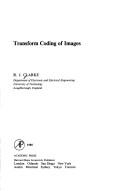 Transform coding of imagesR. J. Clarke · 1985
 The VISTA system for compression of television signal bandwidthsDaivd Charles Rollenhagen · 1969
- 📕Supplementary information on VISTABernard Tse · 1972
 Supplementary information on VISTABernard Tse · 1972
- 📕Channel compression '94 · 1994
- 📕Channel compression · 1992
- 📕The effects of bandwidth compression on image interpreter performanceHarold Martinek · 1979
 A synchronization system for a television bandwidth compression schemeEdward Ellis Carr · 1971
Ranked by number of editions on Open Library, a rough measure of how lasting a book is.
🔗 Related topics
- Data compression In information theory, data compression, source coding, or bit-rate reduction is the process of encoding information using fewer bits than the original…
- Silence compression Silence compression is an audio processing technique used to effectively encode silent intervals, reducing the amount of storage or bandwidth needed to…
- Lossy compression In information technology, lossy compression, or irreversible compression, is the class of data compression methods that uses inexact approximations and…
- Wireless sensor network Wireless sensor networks (WSNs) refer to networks of spatially dispersed and dedicated sensors that monitor and record the physical conditions of the environmen…
- Image compression Image compression is a type of data compression applied to digital images, to reduce their cost for storage or transmission. Algorithms may take advantage…
- Transform coding Transform coding is a type of data compression for "natural" data like audio signals or photographic images. The transformation is typically lossless (perfectly…
- Lossless compression Lossless compression is a class of data compression that allows the original data to be perfectly reconstructed from the compressed data with no loss of…
- Bit rate In telecommunications and computing, bit rate (bitrate or as a variable R) is the number of bits that are conveyed or processed per unit of time. The bit…