Everything about BIOS parameter block
Data structure in the volume boot record
In computing, the BIOS parameter block, often shortened to BPB, is a data structure in the volume boot record (VBR) describing the physical layout of a data storage volume. On partitioned devices, such as hard disks, the BPB describes the volume partition, whereas, on unpartitioned devices, such as floppy disks, it describes the entire medium. A basic BPB can appear and be used on any partition, including floppy disks where its presence is often necessary; however, certain filesystems also make use of it in describing basic filesystem structures. Filesystems making use of a BIOS parameter block include FAT12, FAT16, FAT32, HPFS, and NTFS. Due to different types of fields and the amount of data they contain, the length of the BPB is different for FAT16, FAT32, and NTFS boot sectors. Combined with the 11-byte data structure at the very start of volume boot records immediately preceding the BPB or EBPB, this is also called FDC descriptor or extended FDC descriptor in ECMA-107 or ISO/IEC 9293. Wikipedia →
🧭 Start here: a 6-step reading path
- Read the overview: BIOS parameter blockA 5-minute orientation
- Pick up a classic book: Advanced OS/2 ProgrammingThe most-reprinted book on the subject
- Go sideways: File Allocation TableA closely related topic
- Go sideways: Microsoft basic data partitionA closely related topic
📖 Definitions
No dictionary entry for this exact phrase.
🗂️ The subject at a glance
🏆 Landmark papers (most cited)
- No matching papers found.
📚 Books worth reading
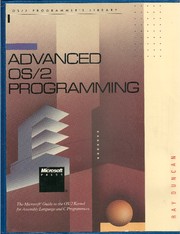 Advanced OS/2 ProgrammingRay Duncan · 1989
 COMPLETE HAND BOOK ON PACKAGING TECHNOLOGY AND INDUSTRIES FOOD PACKAGING, CASHEW PACKAGING, CANNED FOOD STORAGE, PACKAGING OF DEHYDRATED PRODUCTSEIRI Board of Consultants & Engineers · 2016
 ICACIEM 2017 · 2017
Ranked by number of editions on Open Library, a rough measure of how lasting a book is.
🔗 Related topics
- File Allocation Table File Allocation Table (FAT) is a file system developed for personal computers and was the default file system for the DOS and Windows 9x operating systems…
- Microsoft basic data partition In Microsoft operating systems, when using basic disk partitioned with GUID Partition Table (GPT) layout, a basic data partition (BDP) is any partition…
- Volume boot record A volume boot record (VBR) (also known as a volume boot sector, a partition boot record or a partition boot sector) is a type of boot sector introduced…
- Comparison of file systems The following tables compare general and technical information for a number of computer file systems. All widely used file systems record a last modified…
- FAT filesystem and Linux Linux has several filesystem drivers for the File Allocation Table (FAT) filesystem format. These are commonly known by the names used in the mount command…
- Partition-Saving Partition-Saving is a disk imaging utility for Linux, Windows and DOS environments that can save disk partitions in one of the several supported disk image…
- PartitionMagic PartitionMagic is a utility software program for hard disk drive partitioning originally made by PowerQuest, but subsequently owned by Symantec. As of…
- 86-DOS 86-DOS (known internally as QDOS, for Quick and Dirty Operating System) is a discontinued operating system developed and marketed by Seattle Computer Products…