Live briefing
Everything about Average-case complexity
Algorithm characteristic in computations
In computational complexity theory, the average-case complexity of an algorithm is the amount of some computational resource used by the algorithm, averaged over all possible inputs. It is frequently contrasted with worst-case complexity which considers the maximal complexity of the algorithm over all possible inputs. Wikipedia →
🧭 Start here: a 6-step reading path
- Read the overview: Average-case complexityA 5-minute orientation
- Skim a recent paper: Average-case complexity of a branch-and-bound algorithm for Min Dominating SetInfluential work since 2022
- Pick up a classic book: Mathematical structures for computer scienceThe most-reprinted book on the subject
- Read the landmark paper: Average-Case Complexity Versus Approximate Simulation of Commuting Quantum ComputationsCited 257 times
- Go sideways: One-way functionA closely related topic
- Go sideways: Computational complexity theoryA closely related topic
📖 Definitions
No dictionary entry for this exact phrase.
🗂️ The subject at a glance
🏆 Landmark papers (most cited)
Average-Case Complexity Versus Approximate Simulation of Commuting Quantum Computations
Average case complexity of multivariate integration
On the theory of average case complexity
Average-Case Complexity
Pseudorandomness and Average-Case Complexity Via Uniform Reductions
Average-case complexity and decision problems in group theory
Junta Distributions and the Average-Case Complexity of Manipulating Elections
Average Case Complexity of Multivariate Integration for Smooth Functions
🆕 Influential since 2022
Average-case complexity of a branch-and-bound algorithm for Min Dominating Set
On the average-case complexity of pattern matching with wildcards
On the average-case complexity of learning output distributions of quantum circuits
Minimum average case time complexity for sorting algorithms
Average-case complexity of the Whitehead problem for free groups
📚 Books worth reading
 Mathematical structures for computer scienceJudith L. Gersting · 1982
 Operations ManagementRoberta S. Russell, Bernard Taylor · 1998
 Noise and vibration analysisAnders Brandt · 2010
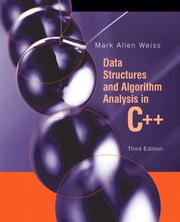 Data structures and algorithm analysis in CMark Allen Weiss · 1993
 Political EconomyCharles S. Devas · 1892
 Treaty Occupationay ToxicologySuelen Queiroz · 2010
 The Jackknife and BootstrapJun Shao, Dongsheng Tu · 1995
 Data structures and algorithms in JavaAdam Drozdek · 2001
Ranked by number of editions on Open Library, a rough measure of how lasting a book is.
🔗 Related topics
- One-way function Unsolved problem in computer science Do one-way functions exist? More unsolved problems in computer science In computer science, a one-way function is…
- Computational complexity theory In theoretical computer science and mathematics, computational complexity theory focuses on classifying computational problems according to their resource…
- Computational complexity In computer science, the computational complexity or simply complexity of an algorithm is the amount of resources required to run it. Particular focus…
- P versus NP problem Unsolved problem in computer science If the solution to a problem can be verified in polynomial time, must the problem be solvable in polynomial time?…
- Generic-case complexity Generic-case complexity is a subfield of computational complexity theory that studies the complexity of computational problems on "most inputs". Generic-case…
- Computational hardness assumption In computational complexity theory, a computational hardness assumption is the hypothesis that a particular problem cannot be solved efficiently (where…
- BPP (complexity) In computational complexity theory, a branch of computer science, bounded-error probabilistic polynomial time (BPP) is the class of decision problems solvable…
- Pseudorandom generator In theoretical computer science and cryptography, a pseudorandom generator (PRG) for a class of statistical tests is a deterministic procedure that maps…