Live briefing
Everything about Asynchronous I/O
Form of input/output processing
Asynchronous I/O is a form of input/output processing that allows a program to initiate an I/O operation and continue processing other tasks before the I/O operation completes. Unlike non‑blocking I/O, which returns control immediately but may require repeated polling, asynchronous I/O enables the system or API to notify the program when the operation finishes. The term “overlapped I/O” is used for asynchronous I/O in the Windows API. Wikipedia →
🧭 Start here: a 6-step reading path
- Read the overview: Asynchronous I/OA 5-minute orientation
- Skim a recent paper: Autism genes converge on asynchronous development of shared neuron classesInfluential work since 2022
- Pick up a classic book: Modern Operating SystemsThe most-reprinted book on the subject
- Read the landmark paper: A 128$\times$128 120 dB 15 $\mu$s Latency Asynchronous Temporal Contrast Vision SensorCited 2,344 times
- Go sideways: Event loopA closely related topic
- Go sideways: Polling (computer science)A closely related topic
📖 Definitions
No dictionary entry for this exact phrase.
🗂️ The subject at a glance
🏆 Landmark papers (most cited)
A 128$\times$128 120 dB 15 $\mu$s Latency Asynchronous Temporal Contrast Vision Sensor
A Fully Asynchronous Multifrontal Solver Using Distributed Dynamic Scheduling
Minimum probability of error for asynchronous Gaussian multiple-access channels
Distributed asynchronous deterministic and stochastic gradient optimization algorithms
The Asynchronous State in Cortical Circuits
Multistage detection in asynchronous code-division multiple-access communications
Asynchronous Holocene optimum of the East Asian monsoon
Near-far resistance of multiuser detectors in asynchronous channels
🆕 Influential since 2022
Autism genes converge on asynchronous development of shared neuron classes
Asynchronous federated learning on heterogeneous devices: A survey
Breaking the Rate-Loss Bound of Quantum Key Distribution with Asynchronous Two-Photon Interference
Asynchronous Deep Reinforcement Learning for Collaborative Task Computing and On-Demand Resource Allocation in Vehicular Edge Computing
Mobility-Aware Cooperative Caching in Vehicular Edge Computing Based on Asynchronous Federated and Deep Reinforcement Learning
📚 Books worth reading
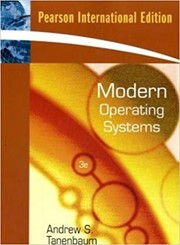 Modern Operating SystemsAndrew S. Tanenbaum, Herbert Bos · 1992
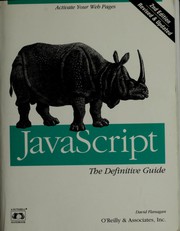 JavaScriptDavid Flanagan · 1996
 Computer ArchitectureJoseph D. Dumas II · 2005
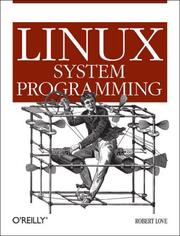 Linux System ProgrammingRobert Love · 2007
 Microprocessor Architecture, Programming, and Applications with the 8085Ramesh S. Gaonkar · 1996
 C# 3.0 in a NutshellJoseph Albahari, Ben Albahari · 2007
 C# 4.0 in a nutshellJoseph Albahari · 2010
 Advanced WindowsJeffrey Richter · 1995
Ranked by number of editions on Open Library, a rough measure of how lasting a book is.
🔗 Related topics
- Event loop In software, an event loop is an algorithm that continually dispatches control flow for events. The loop requests the next event from an event provider…
- Polling (computer science) Polling, or interrogation, refers to actively sampling the status of an external device by a client program as a synchronous activity. Polling is most…
- Interrupt In digital computers, an interrupt is a request for the processor to interrupt currently executing code (when permitted), so that the event can be processed…
- Reactor pattern The reactor software design pattern is an event handling strategy that can respond to many potential service requests concurrently. The pattern's key component…
- Event (computing) In computing, an event is a detectable occurrence or change in state that the system is designed to monitor, such as user input, hardware interrupt, system…
- Input/output In computing, input/output (abbreviated I/O, i/o, or informally IO or io) is the communication between an information processing system, such as a computer…
- Interrupt handler In computer systems programming, an interrupt handler, also known as an interrupt service routine (ISR), is a special block of code associated with a specific…
- Operating system An operating system (OS) is system software that manages computer hardware and software resources, and provides common services for computer programs.…