Everything about Arbitrary-precision arithmetic
Calculations where numbers' precision is only limited by computer memory
In computer science, arbitrary-precision arithmetic, also called bignum arithmetic, multiple-precision arithmetic, or sometimes infinite-precision arithmetic, indicates that calculations are performed on numbers whose digits of precision are potentially limited only by the available memory of the host system. This contrasts with the faster fixed-precision arithmetic found in most arithmetic logic unit (ALU) hardware, which typically offers between 8 and 64 bits of precision. Wikipedia →
🧭 Start here: a 6-step reading path
- Read the overview: Arbitrary-precision arithmeticA 5-minute orientation
- Skim a recent paper: Software Support for Arbitrary Precision Arithmetic in Programming LanguagesInfluential work since 2022
- Pick up a classic book: Programming Massively Parallel ProcessorsThe most-reprinted book on the subject
- Read the landmark paper: Arb: Efficient Arbitrary-Precision Midpoint-Radius Interval ArithmeticCited 180 times
- Go sideways: Fixed-point arithmeticA closely related topic
- Go sideways: Integer overflowA closely related topic
📖 Definitions
Noun Any calculation that is performed on numbers whose digits of precision are limited only by the available memory of the host system.
🗂️ The subject at a glance
🏆 Landmark papers (most cited)
Arb: Efficient Arbitrary-Precision Midpoint-Radius Interval Arithmetic
Motivations for an Arbitrary Precision Interval Arithmetic and the MPFI Library
Arbitrary precision real arithmetic: design and algorithms
Computing the Lambert W function in arbitrary-precision complex interval arithmetic
ArPCIM: An Arbitrary-Precision Analog Computing-in-Memory Accelerator With Unified INT/FP Arithmetic
A parallel algorithm for calculation of determinants and minors using arbitrary precision arithmetic
A Real Polynomial Decision Algorithm Using Arbitrary-Precision Floating Point Arithmetic
FPGA-Specific Custom VLIW Architecture for Arbitrary Precision Floating-Point Arithmetic
🆕 Influential since 2022
📚 Books worth reading
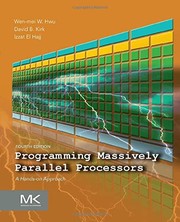 Programming Massively Parallel ProcessorsDavid Kirk, Wen-Mei W. Hwu · 2010
 C interfaces and implementationsDavid R. Hanson · 1996
 Practical algorithms for programmersAndrew Binstock · 1995
Ranked by number of editions on Open Library, a rough measure of how lasting a book is.
🔗 Related topics
- Fixed-point arithmetic In computing, fixed-point is a method of representing fractional (non-integer) numbers by storing a fixed number of digits of their fractional part. Dollar…
- Integer overflow In computer programming, an integer overflow occurs when an arithmetic operation on integers attempts to create a numeric value that is outside of the…
- Two's complement Two's complement is the most common method of representing signed (positive, negative, and zero) integers on computers, and more generally, fixed point…
- Floating-point arithmetic In computing, floating-point arithmetic (FP) is arithmetic on subsets of real numbers formed by a significand (a signed sequence of a fixed number of digits…
- Computer number format A computer number format is the internal representation of numeric values in digital device hardware and software, such as in programmable computers and…
- Data type In computer science and computer programming, a data type (or simply type) is a collection or grouping of data values, usually specified by a set of possible…
- IEEE 754 The IEEE Standard for Floating-Point Arithmetic (IEEE 754) is a technical standard for floating-point arithmetic originally established in 1985 by the…
- Multiplication algorithm A multiplication algorithm is an algorithm (or method) to multiply two numbers. Depending on the size of the numbers, different algorithms are more efficient…