Everything about Alternating current
Electric current that periodically reverses direction

Alternating current (AC) is an electric current that periodically reverses direction and changes its magnitude continuously with time, in contrast to direct current (DC), which flows only in one direction. Alternating current is the form in which electric power is delivered to businesses and residences, and it is the form of electrical energy that consumers typically use when they plug kitchen appliances, televisions, fans and electric lamps into a wall socket. The abbreviations AC and DC are often used to mean simply alternating and direct, respectively, as when they modify current or voltage. Wikipedia →
🧭 Start here: a 6-step reading path
- Read the overview: Alternating currentA 5-minute orientation
- Skim a recent paper: Alternating Current Electroluminescence for Human‐Interactive Sensing DisplaysInfluential work since 2022
- Pick up a classic book: Inventions, Researches and Writings of Nikola TeslaThe most-reprinted book on the subject
- Read the landmark paper: Dispersion and Absorption in Dielectrics I. Alternating Current CharacteristicsCited 9,486 times
- Go sideways: Glossary of electrical and electronics engineeringA closely related topic
- Go sideways: Electric power systemA closely related topic
📖 Definitions
Noun An electric current in which the direction of flow of the electrons reverses periodically.
🏆 Landmark papers (most cited)
Dispersion and Absorption in Dielectrics I. Alternating Current Characteristics
Remediation of dyes in textile effluent: a critical review on current treatment technologies with a proposed alternative
Electrode Materials for Rechargeable Sodium‐Ion Batteries: Potential Alternatives to Current Lithium‐Ion Batteries
Alternating streaming current measurements
Alternating Current Electrospraying
The damnable alternating current
An Alternating Current Battery
Alternating-Current Electrolysis
🆕 Influential since 2022
Alternating Current Electroluminescence for Human‐Interactive Sensing Displays
Applications of Alternating Current/Alternating Potential Electrolysis in Organic Synthesis
Alternating current electrolysis: A photoredox catalysis mimic and beyond
Alternating current electroluminescent fibers for textile displays
IoT-Based Alternating Current Electrical Parameters Monitoring System
📚 Books worth reading
 Inventions, Researches and Writings of Nikola TeslaThomas Commerford Martin · 1905
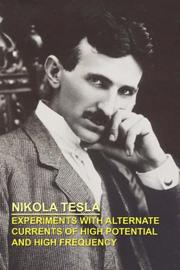 Experiments with alternate currents of high potential and high frequencyNikola Tesla · 1892
 Electric machinesS. A. Nasar, Syed A. Nasar · 1990
- 📕Experiments with Alternate Currents of High Potential and High FrequencyNikola Tesla · 2014
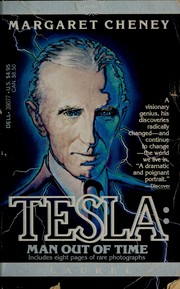 TeslaMargaret Cheney · 1981
 Alternating current fundamentalsJohn R. Duff, Stephen L. Herman · 1961
 Theory and calculation of alternating current phenomenaCharles Proteus Steinmetz · 1897
 The inventions, researches and writings of Nikola TeslaThomas Commerford Martin · 1894
Ranked by number of editions on Open Library, a rough measure of how lasting a book is.
🔗 Related topics
- Glossary of electrical and electronics engineering This glossary of electrical and electronics engineering is a list of definitions of terms and concepts related specifically to electrical engineering and…
- Electric power system An electric power system is a network of electrical components deployed to supply, transfer, and use electric power. An example of a power system is the…
- Electric power distribution Electric power distribution is the final stage in the delivery of electricity. Electricity is carried from the transmission system to individual consumers…
- Electric power transmission Electric power transmission is the bulk movement of electrical energy from a generating site, such as a power plant, to an electrical substation. A long…
- Three-phase electric power Three-phase electric power (abbreviated 3ϕ) is the most widely used form of alternating current (AC) for electricity generation, transmission, and distribution…
- History of electric power transmission Electric power transmission, the tools and means of moving electricity far from where it is generated, date back to the late 19th century. They include…
- Transformer In electrical engineering, a transformer is a passive component that transfers electrical energy from one electrical circuit to another circuit, or multiple…
- Mains electricity Mains electricity, utility power, grid power, domestic power, wall power, household current, or, in some parts of Canada, hydro, is a general-purpose alternatin…