Live briefing
Everything about Alternating Turing machine
Abstract computation model
In computational complexity theory, an alternating Turing machine (ATM) is a non-deterministic Turing machine (NTM) with a rule for accepting computations that generalizes the rules used in the definition of the complexity classes NP and co-NP. The concept of an ATM was set forth by Chandra and Stockmeyer and independently by Kozen in 1976, with a joint journal publication in 1981. Wikipedia →
🧭 Start here: a 6-step reading path
- Read the overview: Alternating Turing machineA 5-minute orientation
- Pick up a classic book: Invitation to Computer ScienceThe most-reprinted book on the subject
- Read the landmark paper: Two-dimensional alternating turing machinesCited 37 times
- Go sideways: True quantified Boolean formulaA closely related topic
- Go sideways: Polynomial hierarchyA closely related topic
📖 Definitions
No dictionary entry for this exact phrase.
🗂️ The subject at a glance
🏆 Landmark papers (most cited)
Two-dimensional alternating turing machines
Two-dimensional alternating turing machines with only universal states
Some observations concerning alternating turing machines using small space
A note on three-way two-dimensional alternating Turing machines
On input read-modes of alternating Turing machines
A note on alternating on-line Turing machines
Some observations concerning alternating turing machines using small space
A remark on middle space bounded alternating Turing machines
📚 Books worth reading
 Invitation to Computer ScienceG. Michael Schneider, Judith L. Gersting · 1995
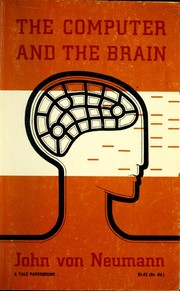 The Computer and the BrainJohn von Neumann · 1958
 Machines Like MeIan McEwan · 2019
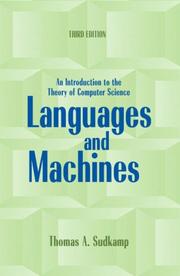 Languages and machinesThomas A. Sudkamp · 1988
 Exploring philosophySteven M. Cahn · 2009
 Three Views of LogicDonald W. Loveland, Richard E. Hodel · 2014
 Understanding Computers Today and TomorrowDeborah Morley · 2003
 Introduction to the theory of computationMichael Sipser · 1996
Ranked by number of editions on Open Library, a rough measure of how lasting a book is.
🔗 Related topics
- True quantified Boolean formula In computational complexity theory, the language TQBF is a formal language consisting of the true quantified Boolean formulas. A (fully) quantified Boolean…
- Polynomial hierarchy In computational complexity theory, the polynomial hierarchy (sometimes called the polynomial-time hierarchy) is a hierarchy of complexity classes that…
- Cook–Levin theorem In computational complexity theory, the Cook–Levin theorem, also known as Cook's theorem, states that the Boolean satisfiability problem is NP-complete…
- Alternating finite automaton In automata theory, an alternating finite automaton (AFA) is a nondeterministic finite automaton whose transitions are divided into existential and universal…
- Two-way finite automaton In computer science, in particular in automata theory, a two-way finite automaton is a finite automaton that is allowed to re-read its input. A two-way…
- PSPACE-complete In computational complexity theory, a decision problem is PSPACE-complete if it can be solved using an amount of memory that is polynomial in the input…
- NC (complexity) Unsolved problem in computer science 𝖭𝖢=?𝖯 More unsolved problems in computer science In computational complexity theory, the class NC (for Nick's…
- Parameterized complexity In computer science, parameterized complexity is a branch of computational complexity theory that focuses on classifying computational problems according…