Live briefing
Everything about Algorithmically random sequence
Binary sequence
Intuitively, an algorithmically random sequence is a sequence of binary digits that appears random to any algorithm running on a universal Turing machine. The notion can be applied analogously to sequences on any finite alphabet. Random sequences are key objects of study in algorithmic information theory. Wikipedia →
🧭 Start here: a 6-step reading path
- Read the overview: Algorithmically random sequenceA 5-minute orientation
- Skim a recent paper: Image Encryption Algorithm based on Pseudo-random SequenceInfluential work since 2022
- Pick up a classic book: C How to ProgramThe most-reprinted book on the subject
- Read the landmark paper: An improved zero-one law for algorithmically random sequencesCited 3 times
- Go sideways: K-trivial setA closely related topic
- Go sideways: Random sequenceA closely related topic
📖 Definitions
No dictionary entry for this exact phrase.
🏆 Landmark papers (most cited)
🆕 Influential since 2022
📚 Books worth reading
 C How to ProgramPaul J. Deitel, Harvey M. Deitel · 2007
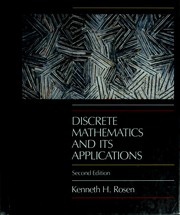 Discrete Mathematics and Its ApplicationsKenneth H. Rosen · 1988
 Discrete mathematicsKenneth A. Ross · 1985
 Mathematical PuzzlesPeter Winkler · 2003
 Probability, random processes, and statistical analysisHisashi Kobayashi · 2011
 Theory and Practice of ComputationShin-ya Nishizaki · 2013
 Parallel Programming in C with MPI and OpenMPMichael J. Quinn · 2003
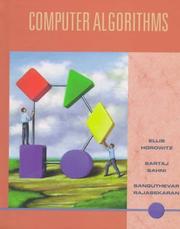 Computer algorithmsEllis Horowitz · 1997
Ranked by number of editions on Open Library, a rough measure of how lasting a book is.
🔗 Related topics
- K-trivial set In mathematics, a set of natural numbers is called a K-trivial set if its initial segments viewed as binary strings are easy to describe: the prefix-free…
- Random sequence The concept of a random sequence is essential in probability theory and statistics. The concept generally relies on the notion of a sequence of random…
- Chaitin's constant In the computer science subfield of algorithmic information theory, a Chaitin constant, Chaitin omega number, or halting probability is a real number that…
- Algorithmic information theory Algorithmic information theory (AIT) is a branch of theoretical computer science that concerns itself with the relationship between computation and information…
- Effective dimension In mathematics, effective dimension is a modification of Hausdorff dimension and other fractal dimensions that places it in a computability theory setting…
- Resource-bounded measure Lutz's resource-bounded measure is a generalisation of Lebesgue measure to complexity classes. It was originally developed by Jack Lutz. Just as Lebesgue…
- Algorithmic probability In algorithmic information theory, algorithmic probability, also known as Solomonoff probability, is a mathematical method of assigning a prior probability…
- Universality probability Universality probability is an abstruse probability measure in computational complexity theory that concerns universal Turing machines. A Turing machine…