Everything about Advanced Distribution Automation
Advanced Distribution Automation (ADA) is a term coined by the IntelliGrid project in North America to describe the extension of intelligent control over electrical power grid functions to the distribution level and beyond. It is related to distribution automation that can be enabled via the smart grid. The electrical power grid is typically separated logically into transmission systems and distribution systems. Electric power transmission systems typically operate above 110kV, whereas Electricity distribution systems operate at lower voltages. Normally, electric utilities with SCADA systems have extensive control over transmission-level equipment, and increasing control over distribution-level equipment via distribution automation. However, they often are unable to control smaller entities such as Distributed energy resources (DERs), buildings, and homes. It may be advantageous to extend control networks to these systems for a number of reasons:Distributed generation is increasingly important in power grids around the world. This generation can help to support local power grids in the presence of blackouts, and ease the load on long-distance transmission lines, but it can also destabilize the grid if not managed correctly". Usually, utility control centers are unable to manage distributed generators directly, and this may be a valuable capability in the future. Industrial and residential loads are increasingly controlled through demand response. For example, during periods of peak electrical demand in the summer, the utility control centers may be able to raise the thermostats of houses enrolled in a load reduction program, to temporarily decrease electrical demand from a large number of customers without significantly affecting their comfort. Customers are usually compensated for their participation in such programs. To enable demand side management, where homes, businesses, and even electric vehicles may be able to receive real-time pricing (RTP) signals from their distribution companies and dynamically adjust their own energy consumption profiles to minimize costs. This would also preserve customer autonomy and mitigate privacy issues. To further the penetration and quality of self-healing, which reduces or eliminates outage time through the use of sensor and control systems embedded in the distribution system. Wikipedia →
🧭 Start here: a 6-step reading path
- Read the overview: Advanced Distribution AutomationA 5-minute orientation
- Skim a recent paper: Energy-aware Advanced Machine Learning Models for Reliable Distribution Automation in Future Smart GridsInfluential work since 2022
- Pick up a classic book: Control and Dynamic SystemsThe most-reprinted book on the subject
- Read the landmark paper: Decentralized Reactive Power Control for Advanced Distribution Automation SystemsCited 66 times
- Go sideways: Distribution Transformer MonitorA closely related topic
- Go sideways: Electrical gridA closely related topic
📖 Definitions
No dictionary entry for this exact phrase.
🗂️ The subject at a glance
No outline available.
🏆 Landmark papers (most cited)
Decentralized Reactive Power Control for Advanced Distribution Automation Systems
Hardware-In-the-Loop Simulation to Test Advanced Automation Devices in Power Distribution Networks
A Systemic Approach for Assessment of Advanced Distribution Automation Functionalities
Look‐ahead distribution power restoration analysis based on integrated operation of distribution automation and advanced metring infrastructure systems
Reliability Improvement of Power Distribution Systems using Advanced Distribution Automation
Architecture Deployment for Application of Advanced Distribution Automation Functionalities in Smart Grids
The Role of Advanced Distribution Automation in Smart Grid
Load Segmentation for Convergence of Distribution Automation and Advanced Metering Infrastructure Systems
🆕 Influential since 2022
📚 Books worth reading
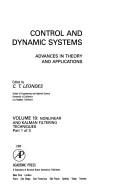 Control and Dynamic SystemsCornelius T. Leondes · 1982
 The web application hacker's handbookDafydd Stuttard, Marcus Pinto · 2007
 Smart gridsDavid Bakken, Krzysztof Iniewski · 2014
 Exploring geovisualizationJ. Dykes, A.M. MacEachren · 2005
- 📕On automating domain connectivity for overset gridsIng-Tsau Chiu · 1994
 BlockchainMelanie Swan · 2015
 New information technologies and librariesAdvanced Research Workshop (1984 Luxembourg, Luxembourg) · 1985
 The certified six sigma master black belt handbookT. M. Kubiak · 2010
Ranked by number of editions on Open Library, a rough measure of how lasting a book is.
🔗 Related topics
- Distribution Transformer Monitor A Distribution Transformer Monitor (DTM) is a specialized hardware device that collects and measures information relative to electricity passing into and…
- Electrical grid An electrical grid (or electricity network) is an interconnected network for electricity delivery from producers to consumers. Electrical grids consist…
- Distribution management system A distribution management system (DMS) is a collection of applications designed to monitor and control the electric power distribution networks efficiently…
- Electric power industry The electric power industry covers the generation, transmission, distribution and sale of electric power to the general public and industry. The commercial…
- Smart grid The smart grid is an enhancement of the 20th century electrical grid, using two-way communications and distributed so-called intelligent devices. Two-way…
- Phasor measurement unit A phasor measurement unit (PMU) is a device used to estimate the magnitude and phase angle of an electrical phasor quantity (such as voltage or current)…
- Power-line communication Power-line communication (PLC) is the carrying of data on a conductor (the power-line carrier) that is also used simultaneously for AC electric power transmissi…
- Substation A substation is a part of an electrical generation, transmission, and distribution system. Substations transform voltage from high to low, or the reverse…