Live briefing

Everything about Advanced Audio Coding
Lossy audio compression format
Advanced Audio Coding (AAC) is an audio coding standard for lossy digital audio compression. It was developed by Dolby, AT&T, Fraunhofer and Sony, originally as part of the MPEG-2 specification but later improved under MPEG-4. AAC was designed to be the successor of the MP3 format and generally achieves higher sound quality than MP3 at the same bit rate. AAC encoded audio files are typically packaged in an MP4 container most commonly using the filename extension .m4a. Wikipedia →
🧭 Start here: a 6-step reading path
- Read the overview: Advanced Audio CodingA 5-minute orientation
- Skim a recent paper: Evaluasi Kinerja Improved Spread Spectrum Steganography pada Advanced Audio CodingInfluential work since 2022
- Pick up a classic book: The Legend of Sleepy HollowThe most-reprinted book on the subject
- Read the landmark paper: Advanced audio coding steganography algorithm with distortion minimization model based on audio beatCited 14 times
- Go sideways: High-Efficiency Advanced Audio CodingA closely related topic
- Go sideways: MPEG-4 Part 3A closely related topic
📖 Definitions
No dictionary entry for this exact phrase.
🏆 Landmark papers (most cited)
Advanced audio coding steganography algorithm with distortion minimization model based on audio beat
A low complexity design of psycho-acoustic model for MPEG-2/4 advanced audio coding
Investigation of Lossless Audio Compression using IEEE 1857.2 Advanced Audio Coding
Autocorrelation Modulation-Based Audio Blind Watermarking Robust Against High Efficiency Advanced Audio Coding
IEEE Standards for Advanced Audio and Video Coding in Emerging Applications
Cascaded trellis-based rate-distortion control algorithm for MPEG-4 advanced audio coding
A Critical Assessment of Advanced Coding Standards for Lossless Audio Compression
Advanced Audio Compression For Lossless Audio Coding Using Ieee 1857.2
🆕 Influential since 2022
📚 Books worth reading
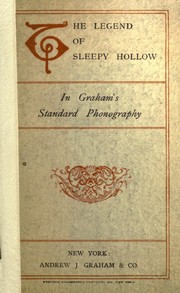 The Legend of Sleepy HollowWashington Irving · 1820
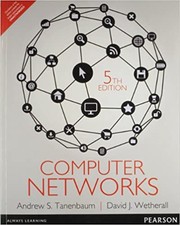 Computer NetworksAndrew S. Tanenbaum, John David Wetherall · 1981
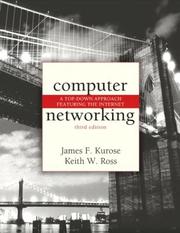 Computer networkingJames F. Kurose, Keith W. Ross · 1900
- 📕Compression for great video and audioBen Waggoner · 2010
 Advances in Multimedia ModelingShipeng Li · 2012
 Sweating BulletsRobert Gaskins · 2012
 Practical radioHenry Smith Williams M.D. LL.D. · 1922
 Advances in multimedia modelingInternational Multimedia Modelling Conference (13th 2007 Singapore) · 2007
Ranked by number of editions on Open Library, a rough measure of how lasting a book is.
🔗 Related topics
- High-Efficiency Advanced Audio Coding High-Efficiency Advanced Audio Coding (HE-AAC) is an audio coding format for lossy data compression of digital audio as part of the MPEG-4 standards. It…
- MPEG-4 Part 3 MPEG-4 Part 3 or MPEG-4 Audio (formally ISO/IEC 14496-3) is the third part of the ISO/IEC MPEG-4 international standard developed by Moving Picture Experts…
- 3GP and 3G2 3GP (3GPP file format) is a digital multimedia container format defined by the Third Generation Partnership Project (3GPP) for 3G UMTS multimedia services…
- Unified Speech and Audio Coding Unified Speech and Audio Coding (USAC) is an audio compression format and codec for both music and speech or any mix of speech and audio using very low…
- FAAC FAAC (Freeware Advanced Audio Coder) is a software project which includes the AAC encoder FAAC and decoder FAAD2. It supports MPEG-2 AAC as well as MPEG-4…
- MP4 file format MP4, officially MPEG-4 Part 14, is a digital multimedia container format most commonly used to store video and audio, but it can also be used to store…
- Audio Lossless Coding MPEG-4 Audio Lossless Coding, also known as MPEG-4 ALS, is an extension to the MPEG-4 Part 3 audio standard to allow lossless audio compression. The extension…
- List of codecs The following is a list of compression formats and related codecs. Linear pulse-code modulation (LPCM, generally only described as PCM) is the format for…