Live briefing
Everything about Additive process
Cadlag in probability theory
An additive process, in probability theory, is a cadlag, continuous in probability stochastic process with independent increments. An additive process is the generalization of a Lévy process. An example of an additive process that is not a Lévy process is a Brownian motion with a time-dependent drift. The additive process was introduced by Paul Lévy in 1937. Wikipedia →
🧭 Start here: a 6-step reading path
- Read the overview: Additive processA 5-minute orientation
- Skim a recent paper: Additive manufacturing of nickel-based superalloys: A state-of-the-art review on process-structure-defect-property relationshipInfluential work since 2022
- Pick up a classic book: Codex alimentariusThe most-reprinted book on the subject
- Read the landmark paper: Additive manufacturing of metallic components – Process, structure and propertiesCited 8,811 times
- Go sideways: Financial models with long-tailed distributions and volatility clusteringA closely related topic
- Go sideways: Automorphic factorA closely related topic
📖 Definitions
No dictionary entry for this exact phrase.
🏆 Landmark papers (most cited)
Additive manufacturing of metallic components – Process, structure and properties
Living Free-Radical Polymerization by Reversible Addition−Fragmentation Chain Transfer: The RAFT Process
Laser additive manufacturing of metallic components: materials, processes and mechanisms
In-Process monitoring of porosity during laser additive manufacturing process
Additive CAD/CAM Process for Dental Prostheses
Modeling process-structure-property relationships for additive manufacturing
Multisensor Data Fusion for Additive Manufacturing Process Control
Markov Decision Process for Image-Guided Additive Manufacturing
🆕 Influential since 2022
Additive manufacturing of nickel-based superalloys: A state-of-the-art review on process-structure-defect-property relationship
Additive manufacturing by digital light processing: a review
Controlling process instability for defect lean metal additive manufacturing
Process Monitoring, Diagnosis and Control of Additive Manufacturing
Real-time in-process control methods of process parameters for additive manufacturing
📚 Books worth reading
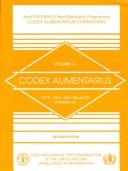 Codex alimentariusJoint FAO/WHO Codex Alimentarius Commission. · 1981
- 📕Additive ManufacturingRupinder Singh, J. Paulo Davim · 2018
- 📕Plant Food By-ProductsGustavo A. González-Aguilar, Mohammed Wasim Siddiqui · 2018
 Additive Manufacturing Change ManagementDavid M. Dietrich, Michael Kenworthy · 2019
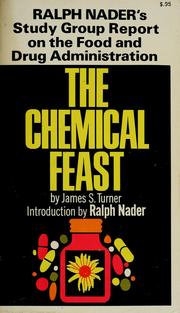 The chemical feastJames S. Turner · 1970
 FAO/WHO food additives data systemJoint FAO/WHO Expert Committee on Food Additives. · 1984
- 📕Additive ManufacturingSteinar Westhrin Killi · 2017
 Twinkie, DeconstructedSteve Ettlinger · 2007
Ranked by number of editions on Open Library, a rough measure of how lasting a book is.
🔗 Related topics
- Financial models with long-tailed distributions and volatility clustering Financial models with long-tailed distributions and volatility clustering have been introduced to overcome problems with the realism of classical financial…
- Automorphic factor In mathematics, an automorphic factor is a certain type of analytic function, defined on subgroups of SL(2,R), appearing in the theory of modular forms…
- Theoretical motivation for general relativity A theoretical motivation for general relativity, including the motivation for the geodesic equation and the Einstein field equation, can be obtained from…
- Multivariate stable distribution The multivariate stable distribution is a multivariate probability distribution that is a multivariate generalisation of the univariate stable distribution…
- Expected shortfall Expected shortfall (ES) is a risk measure—a concept used in the field of financial risk measurement to evaluate the market risk or credit risk of a portfolio…
- Burgers vortex In fluid dynamics, the Burgers vortex or Burgers–Rott vortex is an exact solution to the Navier–Stokes equations governing viscous flow, named after Jan…
- Optimal stopping In mathematics, the theory of optimal stopping or early stopping is concerned with the problem of choosing a time to take a particular action, in order…
- Gamma process A gamma process, also called the Moran-Gamma subordinator, is a two-parameter stochastic process which models the accumulation of effort or wear over time…