Live briefing
Everything about Abstract interpretation
Approach to static program analysis
In computer science, abstract interpretation is a theory of sound approximation of the semantics of computer programs, based on monotonic functions over ordered sets, especially lattices. It can be viewed as a partial execution of a computer program which gains information about its semantics without performing all the calculations. Wikipedia →
🧭 Start here: a 6-step reading path
- Read the overview: Abstract interpretationA 5-minute orientation
- Skim a recent paper: Abstract Layer for LeakyReLU for Neural Network Verification Based on Abstract InterpretationInfluential work since 2022
- Pick up a classic book: KandinskyThe most-reprinted book on the subject
- Read the landmark paper: Abstract Interpretation FrameworksCited 512 times
- Go sideways: Widening (computer science)A closely related topic
- Go sideways: Radhia CousotA closely related topic
📖 Definitions
No dictionary entry for this exact phrase.
🗂️ The subject at a glance
🏆 Landmark papers (most cited)
Abstract Interpretation Frameworks
Abstract interpretation of reactive systems
Abstract interpretation
Abstract interpretation by dynamic partitioning
Refining Model Checking by Abstract Interpretation
Cache behavior prediction by abstract interpretation
Complementation in abstract interpretation
The quotient of an abstract interpretation
🆕 Influential since 2022
Abstract Layer for LeakyReLU for Neural Network Verification Based on Abstract Interpretation
Fashion intelligence system: An outfit interpretation utilizing images and rich abstract tags
Partial (In)Completeness in abstract interpretation: limiting the imprecision in program analysis
Inductive Program Synthesis via Iterative Forward-Backward Abstract Interpretation
Abstract interpretation, Hoare logic, and incorrectness logic for quantum programs
📚 Books worth reading
 KandinskyWassily Kandinsky · 1947
 Gerhard RichterRichter, Gerhard, Birgit Pelzer · 1971
 Willem de KooningWillem De Kooning, Brenda Richardson · 1965
 Cy TwomblyCy Twombly, Giorgio Agamben · 1966
 ChillidaEduardo Chillida · 1967
 Sean ScullySean Scully, Donald Kuspit · 1987
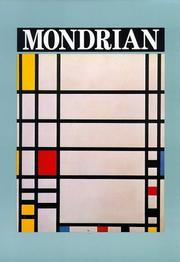 MondrianPiet Mondrian · 1943
 Brice MardenBrice Marden, Lisa Corrin · 1975
Ranked by number of editions on Open Library, a rough measure of how lasting a book is.
🔗 Related topics
- Widening (computer science) In computer science, especially model checking and abstract interpretation, widening refers to at least two different techniques in the analysis of abstract…
- Radhia Cousot Radhia Cousot, née Rezig (French: [ʁadja kuzɔ]; 6 August 1947 – 1 May 2014) was a French computer scientist known for inventing abstract interpretation…
- Programming Computable Functions In computer science, Programming Computable Functions (PCF), or Programming with Computable Functions, or Programming language for Computable Functions…
- Denotational semantics In computer science, denotational semantics (initially known as mathematical semantics or Scott–Strachey semantics) is an approach of formalizing the meanings…
- Computable topology Computable topology is a discipline in mathematics that studies the topological and algebraic structure of computation. Computable topology is not to be…
- Static program analysis In computer science, static program analysis (also known as static analysis or static simulation) is the analysis of computer programs performed without…
- Abstraction (computer science) In software, an abstraction provides access while hiding details that otherwise might make access more challenging. It focuses attention on details of…
- Lambda-mu calculus In mathematical logic and computer science, the lambda-mu calculus is an extension of the lambda calculus introduced by Michel Parigot. It introduces two…