Everything about Absorbance
Logarithm of ratio of incident to transmitted radiant power through a sample
In spectroscopy, absorbance is a logarithmic value which describes the portion of a beam of light which does not pass through a sample. Whilst the name refers to the absorption of light, other interactions of light with a sample may also contribute to attenuation of the beam passing through the sample. The term "internal absorbance" is sometimes used to describe beam attenuation caused by absorption, while "attenuance" or "experimental absorbance" can be used to emphasize that beam attenuation can be caused by other phenomena. Wikipedia →
🧭 Start here: a 6-step reading path
- Read the overview: AbsorbanceA 5-minute orientation
- Skim a recent paper: Absorbance study of powder conditions for laser additive manufacturingInfluential work since 2022
- Pick up a classic book: The shock absorber handbookThe most-reprinted book on the subject
- Read the landmark paper: Evaluation of Specific Ultraviolet Absorbance as an Indicator of the Chemical Composition and Reactivity of Dissolved Organic CarbonCited 4,265 times
- Go sideways: Optical depthA closely related topic
- Go sideways: Attenuation coefficientA closely related topic
📖 Definitions
Noun A logarithmic measure of the amount of light that is absorbed when passing through a substance; the capacity of a substance to absorb light of a given wavelength; optical density.
🏆 Landmark papers (most cited)
Evaluation of Specific Ultraviolet Absorbance as an Indicator of the Chemical Composition and Reactivity of Dissolved Organic Carbon
Development and Validation of an Improved Oxygen Radical Absorbance Capacity Assay Using Fluorescein as the Fluorescent Probe
Ultrasmall Reduced Graphene Oxide with High Near-Infrared Absorbance for Photothermal Therapy
High-Throughput Assay of Oxygen Radical Absorbance Capacity (ORAC) Using a Multichannel Liquid Handling System Coupled with a Microplate Fluorescence Reader in 96-Well Format
Role of the xanthophyll cycle in photoprotection elucidated by measurements of light-induced absorbance changes, fluorescence and photosynthesis in leaves of Hedera canariensis
Assays for Hydrophilic and Lipophilic Antioxidant Capacity (oxygen radical absorbance capacity (ORAC FL )) of Plasma and Other Biological and Food Samples
Oxygen-radical absorbance capacity assay for antioxidants
Development of Land Use Regression Models for PM 2.5 , PM 2.5 Absorbance, PM 10 and PM coarse in 20 European Study Areas; Results of the ESCAPE Project
🆕 Influential since 2022
Absorbance study of powder conditions for laser additive manufacturing
A Highly Selective MOF-Based Probe for Turn-On Luminescent Detection of Al 3+ , Cr 3+ , and Fe 3+ in Solution and Test Paper Strips through Absorbance Caused Enhancement Mechanism
Effect of physical and chemical activation methods on the structure, optical absorbance, band gap and urbach energy of porous activated carbon
Determination of the protein content of complex samples by aromatic amino acid analysis, liquid chromatography-UV absorbance, and colorimetry
Electrospun Janus core (ethyl cellulose//polyethylene oxide) @ shell (hydroxypropyl methyl cellulose acetate succinate) hybrids for an enhanced colon-targeted prolonged drug absorbance
📚 Books worth reading
 The shock absorber handbookJohn C. Dixon · 1999
- 📕Nanocomposite Sorbents for Multiple ApplicationsYu I. Aristov · 2020
- 📕Advanced Separations by Specialized SorbentsEcaterina Stela Dragan · 2014
- 📕Development of tailorable electrically conductive thermal control material systemsM. S. Deshpande · 1997
- 📕Technical evaluation of generic issue 113M. E. Nitzel · 1992
 Injury biomechanics and controlWalter D. Pilkey · 2009
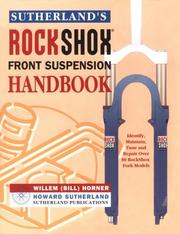 Sutherland's Rockshox front suspension handbookWillem Horner, Howard Sutherland · 2000
- 📕Sorbents Materials for Controlling Environmental PollutionAvelino Nunez-Delgado · 2021
Ranked by number of editions on Open Library, a rough measure of how lasting a book is.
🔗 Related topics
- Optical depth In physics, optical depth or optical thickness is the natural logarithm of the ratio of incident to transmitted radiant power through a material. Thus…
- Attenuation coefficient The linear attenuation coefficient, attenuation coefficient, or narrow-beam attenuation coefficient characterizes how easily a volume of material can be…
- Beer–Lambert law The Beer–Lambert law (also known as Beer's law) is used to determine the concentration of substances in a solution. It describes how the amount of light…
- Transmittance Electromagnetic radiation can be affected in several ways by the medium in which it propagates. It can be scattered, absorbed, and reflected and refracted…
- Absorption (electromagnetic radiation) In physics, absorption of electromagnetic radiation is how matter (typically electrons bound in atoms) takes up a photon's energy—and so transforms electromagne…
- Ultraviolet–visible spectroscopy Ultraviolet–visible spectrophotometry (UV–Vis or UV-VIS) refers to absorption spectroscopy or reflectance spectroscopy in part of the ultraviolet and the…
- Collimated transmission theory The collimated transmission method is a direct way of measuring the optical properties of materials. It is especially useful for sensing the optical properties…
- Molar absorption coefficient In chemistry, the molar absorption coefficient or molar attenuation coefficient (ε) is a measurement of how strongly a chemical species absorbs, and thereby…