Live briefing

Everything about APL (programming language)
Functional programming language for arrays
APL is a programming language developed in the 1960s by Kenneth E. Iverson. Its central datatype is the multidimensional array. It uses a large range of special graphic symbols to represent most functions and operators, leading to very concise code. It has been an important influence on the development of concept modeling, spreadsheets, functional programming, and computer math packages. It has also inspired several other programming languages. Wikipedia →
🧭 Start here: a 6-step reading path
- Read the overview: APL (programming language)A 5-minute orientation
- Skim a recent paper: Atypical Rearrangements in APL-Like Acute Myeloid Leukemias: Molecular Characterization and PrognosisInfluential work since 2022
- Pick up a classic book: APL with a Mathematical AccentThe most-reprinted book on the subject
- Read the landmark paper: Use of Arsenic Trioxide (As2O3 ) in the Treatment of Acute Promyelocytic Leukemia (APL): II. Clinical Efficacy and Pharmacokinetics in Relapsed PatientsCited 1,157 times
- Go sideways: Kenneth E. IversonA closely related topic
- Go sideways: Shared VariablesA closely related topic
📖 Definitions
Symbol ISO 639-3 language code for Lipan.
🏆 Landmark papers (most cited)
Use of Arsenic Trioxide (As2O3 ) in the Treatment of Acute Promyelocytic Leukemia (APL): II. Clinical Efficacy and Pharmacokinetics in Relapsed Patients
Distinct interactions of PML-RARα and PLZF-RARα with co-repressors determine differential responses to RA in APL
APL regulates vascular tissue identity in Arabidopsis
Partial T cell signaling: Altered phospho-? and lack of zap70 recruitment in APL-induced T cell anergy
Effect of all transretinoic acid in newly diagnosed acute promyelocytic leukemia. Results of a multicenter randomized trial. European APL 91 Group
Structure, localization and transcriptional properties of two classes of retinoic acid receptor alpha fusion proteins in acute promyelocytic leukemia (APL): structural similarities with a new family of oncoproteins.
PML/RARα and FLT3-ITD induce an APL-like disease in a mouse model
Very long-term outcome of acute promyelocytic leukemia after treatment with all-trans retinoic acid and chemotherapy: the European APL Group experience
🆕 Influential since 2022
Atypical Rearrangements in APL-Like Acute Myeloid Leukemias: Molecular Characterization and Prognosis
Differentiation Syndrome in Acute Leukemia: APL and Beyond
20(S)-ginsenoside Rh2 ameliorates ATRA resistance in APL by modulating lactylation-driven METTL3
Deneddylation of PML/RARα reconstructs functional PML nuclear bodies via orchestrating phase separation to eradicate APL
Long-term outcome of children with acute promyelocytic leukemia: a randomized study of oral versus intravenous arsenic by SCCLG-APL group
📚 Books worth reading
- 📕APL with a Mathematical AccentC. A. Reiter · 2017
 APL--an interactive approachLeonard Gilman, Allen J. Rose · 1974
 APL is easy!Jerry R. Turner · 1982
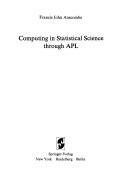 Computing in statistical science through APLFrancis John Anscombe · 1981
 APLRaymond P. Polivka, Raymond Polivka · 1975
- 📕A practical introduction to APL 3 & 4Graeme Donald Robertson · 2008
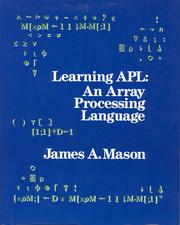 Learning A. P. LJames A. Mason · 1985
 APLB. Legrand · 1982
Ranked by number of editions on Open Library, a rough measure of how lasting a book is.
🔗 Related topics
- Kenneth E. Iverson Kenneth Eugene Iverson (17 December 1920 – 19 October 2004) was a Canadian computer scientist noted for the development of the programming language APL…
- Shared Variables Shared Variables are a feature of the programming language APL which allows APL programs running on one processor to share information with another processor…
- APL syntax and symbols This article contains APL source code. Without proper rendering support, you may see question marks, boxes, or other symbols instead of APL symbols. The…
- Adin Falkoff Adin D. Falkoff (19 December 1921 – 13 August 2010) was an engineer and computer systems and programming systems designer who was mostly known for his…
- Iverson Award The Iverson Award, more formally the Kenneth E. Iverson Award for Outstanding Contribution to APL, is presented by the Special Interest Group on APL (SIGAPL)…
- John M. Scholes John Morley Scholes (1948–2019) was a British computer scientist. In his professional career he was devoted to the development of the programming language…
- Roger Hui Roger Kwok Wah Hui (29 December 1953 – 16 October 2021) was a computer scientist who worked on array programming languages. He codeveloped the programming…
- Lawrence M. Breed Lawrence Moser "Larry" Breed (July 17, 1940 – May 16, 2021) was a computer scientist, artist and inventor, best known for his involvement in the programming…